
Iran’s hardliners accuse leadership of ‘coup’ against Islamic Republic: Report
Iran’s Hardliners Accuse Leadership of Coup Against Islamic Republic
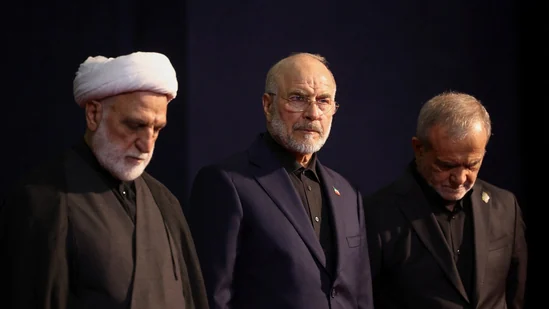
Bharatmorningnews.com – In a developing political narrative, Iran’s hardliners accuse leadership of orchestrating a covert coup against the Islamic Republic. As tensions between Tehran and Washington escalate, internal power struggles are intensifying, with conservative factions asserting that current leaders are quietly undermining the regime’s foundational authority. The accusation centers on figures like President Masoud Pezeshkian and Deputy Foreign Minister Kazem Gharibabadi, who are seen as steering Iran away from its traditional ideological course.
Internal Tensions and Accusations
The report, cited by CNN, claims that Iran’s hardliners accuse leadership of weakening the country’s core principles. This includes a perceived shift in foreign policy, particularly the nuclear deal with the U.S., which hardliners view as a betrayal of Islamic values. Such allegations highlight the growing rift between reformist and conservative factions within the government, raising questions about the stability of Iran’s political framework. The current leadership is accused of prioritizing pragmatic diplomacy over the hardline stance that has defined the Islamic Republic since its inception.
“The signs are clear: a coup is being planned in the shadows,” said a senior Iranian politician, emphasizing the risk of internal destabilization. “These leaders are not loyal to the system they claim to protect.”
During the funeral of former Supreme Leader Ayatollah Ali Khamenei, who was killed in the initial U.S.-Israel strike on February 28, hardliners accused Pezeshkian of complicity in the regime’s erosion. Mourners at the ceremony chanted slogans like “death to the compromiser,” targeting the president for his perceived alignment with Western interests. The incident underscored a deepening divide, with hardliners seeking to reassert control over the country’s direction.
The Role of Mojtaba Khamenei and Power Dynamics
The absence of Mojtaba Khamenei, the Supreme Leader’s son, has further emboldened critics. While he is the new head of the Islamic Republic, his limited public engagement has left a vacuum, allowing other officials to assume more prominent roles. Iranian analysts suggest that this lack of visibility may indicate a lack of influence, with Pezeshkian and Ghalibaf accused of consolidating authority without his endorsement. The situation has sparked speculation about whether the hardliners are attempting to sideline the Khamenei family in favor of a more Western-oriented governance model.
“Without Mojtaba’s direct involvement, the current leadership operates in a fragmented manner,” noted Arash Azizi, a U.S.-based expert on Iranian politics. “This fragmentation is a deliberate strategy to weaken the regime’s cohesion.”
Iran’s hardliners accuse leadership of not only shifting foreign policy but also of diluting the role of religious institutions in governance. The Supreme Leader, traditionally the most powerful figure in the country, is now seen as a figurehead, with critics arguing that the executive branch is gaining undue influence. This perception has fueled calls for a return to the stricter, more ideologically driven leadership that characterized the early years of the Islamic Republic.
Escalating Conflict with the U.S. and Regional Implications
As the conflict with the U.S. intensifies, the accusations of a coup have taken on added significance. Recent strikes on Iranian infrastructure, including targets in the Strait of Hormuz, have been framed as evidence of a leadership strategy to ease tensions with Washington. Iran’s hardliners accuse leadership of negotiating without adequate consultation, fearing that these actions will erode the country’s sovereignty. The strikes, however, have also drawn criticism from within Iran, with some hardliners arguing that they are a necessary response to U.S. aggression.
The U.S. Central Command reported that consecutive nights of attacks focused on strategic sites, including logistics hubs and surveillance operations. These strikes, coupled with Iran’s suspension of the interim nuclear deal, have heightened the risk of a broader regional conflict. Analysts suggest that the alleged coup accusations are part of a larger effort to rally domestic support and justify military actions against perceived enemies, both foreign and internal.
Iran’s hardliners accuse leadership of failing to unify the country in the face of external pressures. With the new Supreme Leader still in the background, critics claim that the leadership is pursuing a path of compromise that weakens Iran’s strategic position. The report highlights how the coup narrative is being used to justify both political realignments and military posturing, creating a complex web of alliances and rivalries within the government. As the situation unfolds, the fate of the Islamic Republic may hinge on the outcome of this internal power struggle.