
Sky is no longer the limit: Vikram-1 launch is a leap for India’s private space sector
Sky is no longer the limit: Vikram-1 launch is a leap for India’s private space sector
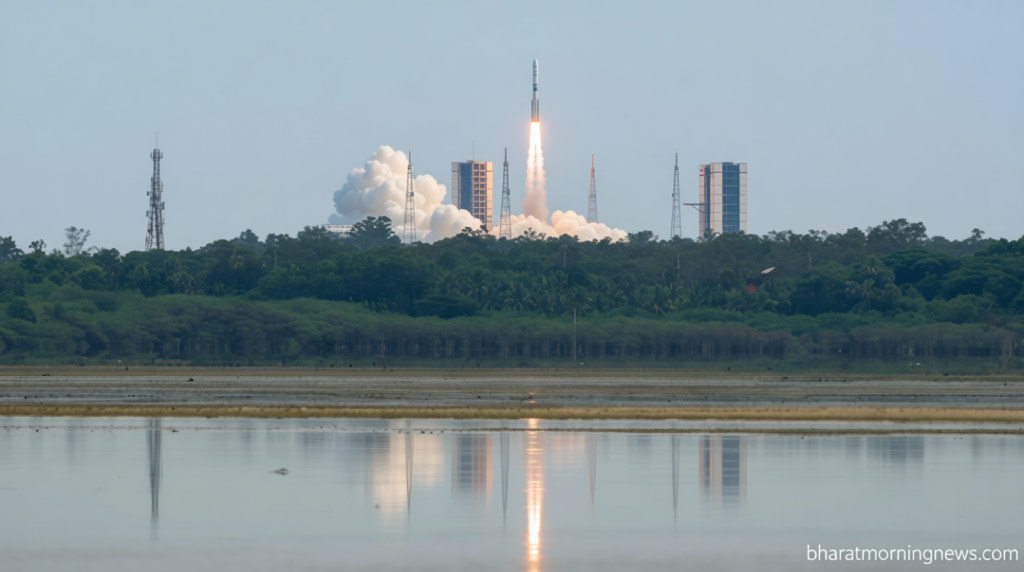
Bharatmorningnews.com – On Saturday, India’s private space industry took a significant step forward with the successful launch of its first domestically built rocket, Vikram-1, from the Satish Dhawan Space Centre in Sriharikota. This marked a historic moment as the nation’s first commercial company independently reached orbit, joining an elite group of global private firms with orbital launch capabilities.
Achieving Orbital Success
The Hyderabad-based startup Skyroot Aerospace’s Vikram-1, a seven-story launch vehicle constructed entirely from carbon composites, lifted off at 12:05 pm. Just over an hour later, the company announced via X that the rocket had completed its final burn and deployed payloads into a ~450 km orbit. This accomplishment solidified India’s position as the third country to achieve private orbital launch capability.
Engineering Innovation
Vikram-1 is a 24-meter, four-stage vehicle—three solid-fuel stages followed by a liquid-fueled orbital adjustment module capable of placing multiple satellites into orbit. It is designed to carry payloads up to 350 kg into low Earth orbit, with its maiden flight targeting a 450 km altitude at a 60-degree orbital inclination. The rocket’s airframe, five times lighter than the strongest steel, is a testament to India’s growing aerospace expertise, according to Skyroot co-founder and CEO Pawan Kumar Chandana.
“This mission represents 100% indigenous design and manufacturing. We’ve developed hundreds of systems from scratch, ensuring every component functions seamlessly to prepare for launch,” Chandana stated in an earlier interview with HT.
Technological Breakthroughs
The rocket’s liquid engines, 3D-printed in metal, were developed using a streamlined process that integrates complex components into a single unit. This approach, Chandana explained, reduces assembly time and enhances reliability. The payloads carried included technology demonstrators from Grahaa Space, Cosmoserve, and DCubed, alongside Skyroot’s SCOPE unit. Notably, the mission also featured a lab-grown “Diamond Lotus” from Bengaluru-based Cosmos Diamonds.
Artistic elements were also part of the payload, including a miniature gold rocket adorned with micro-sculptures of three iconic Indian scientists. Each sculpture, smaller than a grain of rice, honored CV Raman, APJ Abdul Kalam, and Vikram Sarabhai—the father of India’s space program. A handwritten postcard from Prime Minister Narendra Modi, bearing the patriotic slogan “Vande Mataram,” was among the items aboard.
Growth and Ambitions
Skyroot Aerospace, founded eight years ago by Chandana and Naga Bharath Daka—both IIT alumni and former ISRO scientists—now employs over 1,000 people, with 400 dedicated to the Vikram-1 project. The company’s Infinity Campus in Hyderabad, a 2 lakh square foot facility inaugurated by Modi in November 2025, is capable of producing one orbital rocket monthly.
Daka, describing the vehicle to ANI, called it “a one-of-a-kind” achievement, highlighting the mission’s role in advancing India’s space ambitions. The company’s first orbital flight followed its suborbital debut on November 18, 2022, which made history as the first private rocket to reach space from Indian soil. This Saturday’s launch was only its second orbital mission.
Financial Milestones
In May, Skyroot became the first Indian space startup to attain unicorn status, securing $60 million in funding at a $1.1 billion valuation. The investment was led by Sherpalo Ventures, the venture capital arm of early Google investor Ram Shriram, alongside Singapore’s GIC sovereign wealth fund. Temasek, another state-backed investor, also supported the endeavor.
While the exact cost of developing Vikram-1 remains undisclosed, Chandana acknowledged that raising capital was “one of the biggest challenges” for the company. The mission’s data, he emphasized, will be critical for refining future designs and establishing a robust commercial launch schedule.