
Gianni Infantino faces FIFA election threat as UEFA backs surprise rival: Report
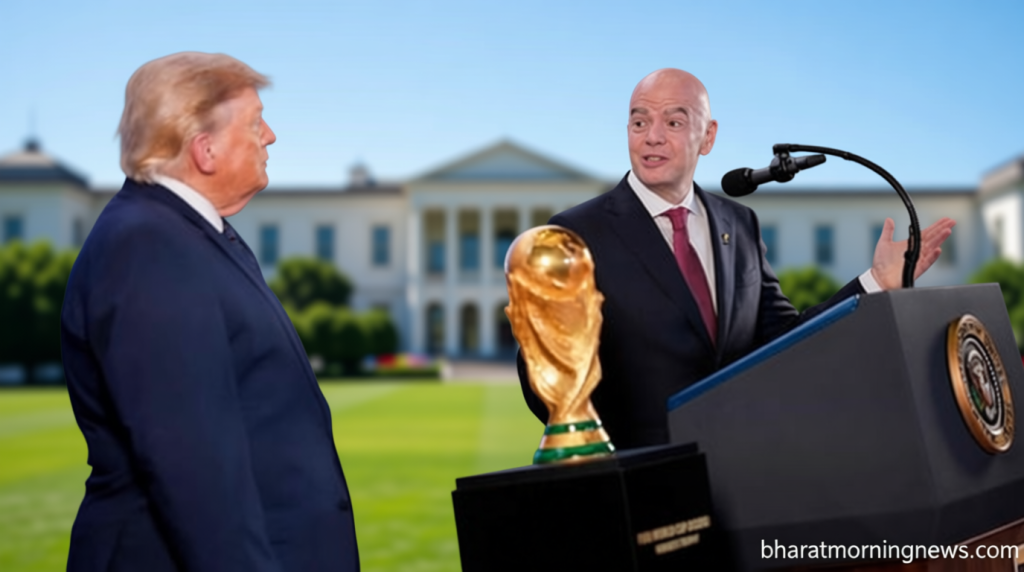
Gianni Infantino Faces FIFA Election Threat as UEFA Supports Surprise Rival
Bharatmorningnews.com – Gianni Infantino, the current FIFA president, is now under pressure as a potential challenge emerges in the upcoming FIFA presidential election. Reports indicate that UEFA member nations are increasingly considering backing a rival candidate, signaling a possible shift in the political landscape of global football. The November 2026 vote has become a focal point of controversy, with mounting concerns over FIFA’s management of the 2026 World Cup and its long-term strategic decisions. This situation could reshape the organization’s leadership, especially as the UEFA-backed contender gains traction and threatens Infantino’s position.
Controversies Over FIFA’s 2026 World Cup Management
The 2026 World Cup, hosted jointly by the United States, Mexico, and Canada, has become a flashpoint for criticism against FIFA’s administrative practices. One of the most notable disputes centers on the visa challenges faced by both fans and athletes, which have sparked debates about accessibility and fairness in international football. Additionally, the treatment of the Iranian national team during the tournament added to the backlash, with even officials like Somali referee Omar Artan affected by the logistical issues. Artan was denied entry to the U.S. and had to withdraw from key matches, raising questions about FIFA’s ability to coordinate effectively across borders.
“Folarin Balogun’s red card was overturned, allowing him to play in the USA’s loss to Belgium. While Infantino claimed no direct role in the decision, Trump asserted that the call was influenced by his conversations with the FIFA head.”
This incident highlights the growing tension between FIFA’s leadership and its international stakeholders, particularly as the 2026 tournament’s logistical hiccups fuel dissatisfaction among member associations.
UEFA’s Strategic Move and Emerging Candidates
UEFA’s support for a surprise rival in the FIFA election suggests a deliberate strategy to counterbalance Infantino’s influence. The organization, which has historically maintained a strong presence in global football governance, is now positioning itself as a key player in the upcoming contest. Potential candidates include Nasser Al-Khelaifi, the influential businessman and president of Paris Saint-Germain, who has been mentioned as a possible contender. His candidacy is seen as a strategic move to leverage UEFA’s interests in European football and challenge Infantino’s dominance.
Other names on the radar include Dariusz Mioduski, a former Polish football official, and Victor Montagliani, a long-time member of UEFA’s Executive Committee. These individuals bring varied perspectives to the race, which could lead to a more competitive election. Meanwhile, Patrice Motsepe, the South African businessman and chairman of the Confederation of African Football, is also being discussed as a potential candidate, further diversifying the field and adding complexity to the political dynamics at play.
The FIFA Presidential Election Landscape
The FIFA presidential election is set to take place in November 2026, with the 2027 FIFA Congress serving as the official venue for the vote. This timeline has intensified discussions about the candidates’ readiness and the political strategies they will employ. While Infantino has maintained his leadership for the past five years, the growing opposition from UEFA and other stakeholders has put him on the defensive. His re-election campaign will need to address concerns about FIFA’s transparency, decision-making processes, and the controversies surrounding the 2026 World Cup.
UEFA’s backing of a surprise rival represents a significant departure from its traditional approach to FIFA elections. Historically, UEFA has played a key role in shaping FIFA’s policies, but this time, the organization is seen as more actively seeking to change the direction of global football governance. The support for Al-Khelaifi and others is not only a reflection of their individual strengths but also of the broader dissatisfaction with FIFA’s current trajectory. As the election approaches, the political stakes are rising, and the outcome could have far-reaching implications for the future of the sport.
Global Implications of the FIFA Election Challenge
The FIFA election challenge has the potential to reshape the organization’s leadership and influence its global policies. If the UEFA-backed rival secures a significant following, it could signal a shift toward more regional representation in FIFA’s decision-making. This change might lead to a reevaluation of FIFA’s governance structure, with a focus on addressing concerns about corruption, transparency, and the interests of smaller member associations. Infantino’s leadership has been praised for modernizing FIFA, but the current controversy could prompt a reassessment of his priorities and effectiveness.
As the race for the FIFA presidency intensifies, the focus keyword “Gianni Infantino faces FIFA election” will likely be reiterated throughout the narrative. This natural repetition ensures visibility without overstuffing. The election’s outcome is not only a matter of political preference but also a reflection of the football community’s evolving expectations. With the November 2026 vote drawing closer, the stage is set for a high-stakes contest that could redefine the future of international football governance.