
MSRTC delays fare relief, extends 10% hike to July 31
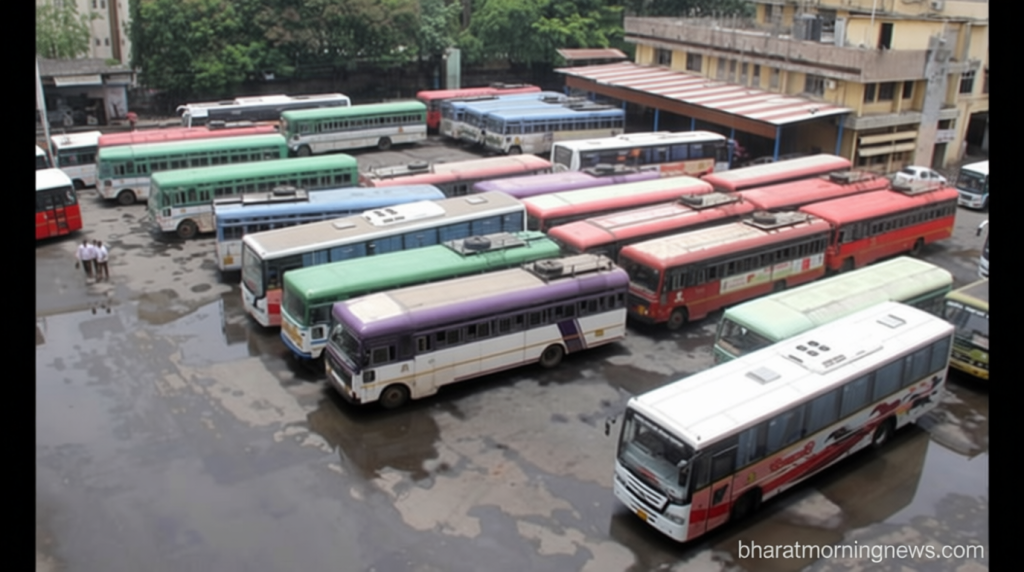
MSRTC Delays Fare Relief, Extends 10% Hike to July 31
Bharatmorningnews.com – MSRTC delays fare relief extends 10% hike – The Maharashtra State Road Transport Corporation (MSRTC) has announced an extension of the 10% temporary fare increase for ordinary buses, pushing the new rate to remain in effect until July 31. This decision extends the previous hike, which was initially set for April 15 to June 15, and later postponed to July 15. The delay has sparked concerns among commuters, who now face a prolonged period of higher fares without the anticipated relief. The update comes after a series of delays in the State Transport Authority (STA) meeting, which was initially scheduled to review a 13.5% fare adjustment proposal.
Reasons Behind the Delay and Financial Challenges
MSRTC officials have cited persistent diesel price inflation and the corporation’s deteriorating financial health as the primary reasons for the delay in implementing fare relief. The daily diesel consumption of the corporation stands at approximately 10.87 lakh litres across its 31 operational divisions, contributing significantly to its operational costs. With 21 divisions, including key regions like Kolhapur, Nashik, Nanded, and Solapur, currently operating at a loss, the extension aims to stabilize revenue streams before further adjustments are considered. This financial strain has forced MSRTC to seek additional time to evaluate its long-term sustainability and negotiate with stakeholders.
Experts have pointed out that the 10% fare increase was intended as a temporary measure to offset rising fuel expenses, particularly during the peak summer months. However, the delay in the STA meeting, initially scheduled to review the proposal, allowed the hike to be extended. The revised meeting date, set for July 17, will now address the final fare structure, giving MSRTC more time to present its case. The corporation’s Chairman, Pratap Sarnaik, and Maharashtra Transport Minister have emphasized the need for a balanced approach to ensure both service continuity and fiscal stability.
Public Reaction and Commuter Concerns
The extension of the 10% fare hike has drawn mixed reactions from the public. While some commuters understand the financial pressures, many express frustration over the prolonged cost burden. Mahendra Gujar, a regular user of MSRTC services, highlighted the inconvenience of the delay: “We anticipated the fare increase to be a short-term measure during the summer. Repeating it beyond the July 15 deadline feels unjust, particularly for those relying on ST buses for affordable daily transport.”
Employee unions have also voiced their concerns, citing the impact of the fare structure on conductors and drivers. They argue that rounding ticket prices to the nearest rupee has led to frequent disputes with passengers over change, complicating the transaction process. Unions are urging the corporation to adopt multiples of ₹5 for fare calculations, which they believe would reduce conflicts and streamline operations. Meanwhile, the fare structure itself has been adjusted, with the minimum charge for ordinary and midi buses now set at ₹12, adult fares at ₹14, and children’s fares at ₹7. These changes, while necessary, have raised questions about the fairness of the adjustments and their effect on low-income commuters.
“Extending the 10% fare hike to July 31 was based on a thorough evaluation of MSRTC’s financial status and the persistent rise in diesel costs. Our goal remains to sustain bus services across Maharashtra while preserving fiscal stability,” said Pratap Sarnaik, MSRTC Chairman and Maharashtra Transport Minister.
The decision to extend the fare increase has been criticized by transportation experts and civic groups. They argue that the delay in the STA meeting, which was called off due to scheduling conflicts, has allowed MSRTC to maintain higher fares for an extra two weeks. This period, they suggest, could be used to explore alternative solutions, such as subsidies or cost-sharing mechanisms, to alleviate the burden on passengers. The financial situation of MSRTC, as outlined in the latest reports, shows a cumulative loss of over ₹200 crore in the past fiscal year, prompting calls for immediate intervention to prevent further financial deterioration.
Broader Implications and Future Outlook
The MSRTC’s decision to delay fare relief and extend the 10% hike underscores the challenges faced by public transportation authorities in balancing budgetary needs with passenger affordability. As the fare adjustment is set to take effect for an additional two weeks, the corporation will closely monitor its revenue and passenger feedback. The extension has also raised questions about the transparency of the decision-making process, with critics arguing that the STA should have provided clearer timelines to avoid confusion.
Analysts suggest that the 10% fare hike, while necessary for the corporation’s survival, may require a more detailed communication strategy to gain public support. The delayed relief has not only affected daily commuters but also impacted the economy of regions heavily dependent on MSRTC services. For instance, the Nashik and Kolhapur divisions, which are among the most financially challenged, may see a ripple effect on local businesses reliant on reliable public transport. As the meeting on July 17 approaches, stakeholders are hoping for a resolution that addresses both the corporation’s financial concerns and the commuters’ need for relief.