
Jharkhand Governor, CM lead Jagannathpur Rath Yatra
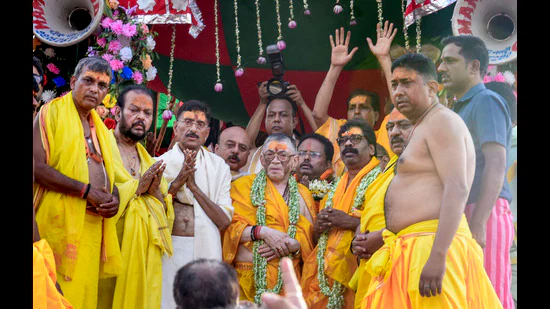
Jharkhand Governor and CM Lead Jagannathpur Rath Yatra
Bharatmorningnews.com – The Jharkhand Governor and Chief Minister led the vibrant Rath Yatra Festival at the revered Jagannathpur Temple, drawing thousands of devotees to Dhurwa for the annual celebration. This grand event, a cornerstone of Jharkhand’s cultural heritage, unfolded with spiritual fervor as leaders joined the faithful in honoring Lord Jagannath, along with his consort Subhadra and brother Balabhadra. The participation of Santosh Kumar Gangwar, the Jharkhand Governor, and Hemant Soren, the Chief Minister, highlighted the state’s commitment to preserving and promoting its rich traditions, while also underscoring the symbolic unity between the executive and legislative wings of governance.
Ancient Tradition Meets Modern Leadership
Rooted in ancient customs, the Jagannathpur Rath Yatra has long been a cherished pilgrimage for devotees across Jharkhand. This year’s event, however, carried added significance as it became a platform for state leaders to amplify its reach. The Jharkhand Governor CM lead Jagannathpur Rath Yatra not only emphasized the festival’s spiritual value but also outlined plans to integrate it into the state’s broader developmental agenda. As the chariot procession began, the Governor and Chief Minister walked alongside the crowd, embodying the shared devotion that defines this sacred occasion.
The event’s grandeur was further enhanced by the ceremonial initiation of the chariot by Hemant Soren, who symbolically pulled the rope to mark the start of the yatra. This act, traditionally performed by the chief deity’s devotees, was interpreted as a gesture of the Chief Minister’s dedication to the temple’s legacy. The procession, which moved through the bustling streets of Dhurwa, was accompanied by devotional chants of “Jai Jai Jagannath” and the rhythmic sound of traditional instruments, creating an immersive experience for all attendees.
Boosting Tourism Through Cultural Promotion
The Jharkhand Governor CM lead Jagannathpur Rath Yatra marked a pivotal moment in the state’s efforts to elevate its cultural landmarks as tourist attractions. During the inauguration, Soren announced ambitious plans to develop infrastructure around the temple, including the construction of a grand archway on the main road leading to the site. This initiative aims to streamline access for visitors while preserving the sanctity of the ancient ritual. The Governor also expressed hope that the festival would attract national and international attention, positioning Jagannathpur as a hub for spiritual tourism in India.
Devotees from all corners of Jharkhand gathered to partake in the yatra, with the crowd reflecting the diverse demographics of the state. The presence of state ministers, MPs, MLAs, and other dignitaries underscored the event’s political and social importance. As the leaders engaged with the faithful, they reiterated their vision of harmonizing tradition with modernity, ensuring that the Jagannathpur Rath Yatra remains a cherished part of Jharkhand’s cultural identity.
The festival’s impact extended beyond spiritual observance, fostering a sense of community and collective pride. For many attendees, the yatra was an opportunity to reconnect with their roots and celebrate the shared values that bind the state’s people. The Jharkhand Governor CM lead Jagannathpur Rath Yatra served as a reminder of the enduring power of rituals in shaping cultural narratives and strengthening societal bonds.
Historical and Cultural Significance of Jagannathpur Temple
Located in the heart of Jharkhand’s tribal regions, the Jagannathpur Temple is not only a place of worship but also a living testament to the state’s historical and cultural tapestry. The Rath Yatra, a key part of the temple’s annual cycle, dates back centuries and is deeply intertwined with the traditions of the local communities. The event’s inclusion of the Jharkhand Governor CM lead Jagannathpur Rath Yatra ensured that both state leadership and the people of Jharkhand were visibly united in their reverence for this heritage.
Historians and cultural scholars note that the festival’s roots trace to the ancient Kshatriya tradition, which emphasized community gatherings and collective rituals. The temple’s unique architecture, a blend of indigenous and classical influences, further cements its role as a cultural landmark. By supporting the Rath Yatra, the state leaders not only honored its religious importance but also recognized its potential to serve as a unifying force for Jharkhand’s diverse population.
The Role of Media in Highlighting the Event
As the Jharkhand Governor CM lead Jagannathpur Rath Yatra unfolded, media coverage played a crucial role in amplifying its significance. The Hindustan Times, through its Special Correspondent Raj Kumar, provided in-depth reporting on the event, capturing its cultural essence and political implications. Kumar’s extensive experience in covering Jharkhand’s socio-political landscape ensured that the yatra’s impact was portrayed with both depth and relevance to the state’s development priorities.
His articles highlighted the growing recognition of Jagannathpur as a site of historical and spiritual importance, while also shedding light on the broader themes of cultural preservation and community engagement. The Jharkhand Governor CM lead Jagannathpur Rath Yatra was not just a celebration of faith but also a statement of the state’s dedication to showcasing its unique heritage on a national scale. Kumar’s ability to weave these narratives into his reporting added to the event’s visibility and resonance among both local and national audiences.