
‘Mothership of Satan is in Tehran’: US ambassador hides in shelter in Israel as Iran war escalates
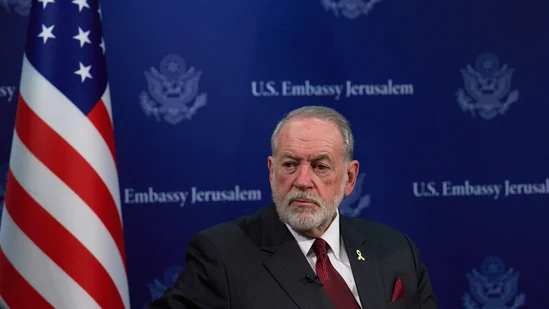
US Ambassador Hides in Shelter Amid Iranian Threat Escalation
The ‘Mothership of Satan’ Claim and Its Strategic Implications
Bharatmorningnews.com – The phrase “Mothership of Satan is in Tehran” has taken center stage in the ongoing crisis between Israel and Iran, as US Ambassador Mike Huckabee reportedly sought refuge in a shelter during heightened military activity. This dramatic statement, made in the context of escalating hostilities, underscores the growing perception that Iran’s leadership is a central threat to regional stability and global security. The remarks, shared on social media, highlight the urgency of the situation and the strategic importance of Tehran in the conflict’s narrative.
Iranian Missile Attacks and Israeli Retaliation
Iran’s recent missile strikes on Israeli territory marked a pivotal moment in the conflict, prompting immediate retaliation by Israeli forces. Early Monday, the Israeli military confirmed airstrikes targeting a key industrial facility in Iran, aiming to degrade the country’s missile capabilities and disrupt its strategic operations. These strikes, which followed Iran’s overnight missile attacks, have intensified fears of a broader regional war, with both sides demonstrating a willingness to escalate tensions.
“I could hear intense explosions above us, and I’m praying they’re defensive countermeasures,” Huckabee stated on X, as he recounted the chaos unfolding near the US embassy in Tel Aviv. The ambassador’s comments reflect the heightened anxiety among diplomats and civilians in Israel, who are bracing for further attacks.
“Iran fired missiles toward Israel last night and early this morning. Missile warnings were heard at 06:00 a.m. in Jerusalem. They were intercepted, thank God! Iran and its agents of evil want to burn America and Israel. The mothership of Satan is in Tehran,” he added, framing Iran’s actions as a deliberate assault on Western interests.
Diplomatic Repercussions and Global Concerns
The renewed violence has not only destabilized the Middle East but also sent shockwaves through global diplomatic channels. The US, which has long maintained a strategic presence in Israel, now faces the challenge of mediating between its ally and Iran, a key player in the region. As tensions rise, international observers are closely monitoring the conflict’s potential to draw in other powers, including the United States, and widen the scope of the war.
Amid the chaos, US President Donald Trump has reemphasized the need for diplomacy, urging Iran to return to negotiations. “You’ve shot your missiles, that’s enough. Get back to the table and make a deal,” he said, echoing the urgency of the moment. However, the collapse of earlier ceasefire efforts suggests that Iran’s aggressive posture may not be easily reversed, raising concerns about the long-term consequences for regional alliances and global peace.
“If Netanyahu retaliates, it could spiral into an endless cycle reminiscent of past decades or millennia of hostilities,” Trump warned during a Fox News interview, linking the current conflict to historical patterns of Middle Eastern strife. His remarks underscore the delicate balance between military action and diplomatic resolution, as the world watches the situation unfold.
“We’re very close. I would say an agreement would be signed on Monday, Tuesday or Wednesday of this coming week. And now this takes place,” he noted, indicating that the current escalation could derail progress toward a lasting peace.
Context and Significance of the ‘Mothership of Satan’ Metaphor
The use of the phrase “mothership of Satan” by Huckabee is not merely symbolic—it reflects a broader ideological framing of Iran as a malevolent force in the region. This term, which has gained traction in recent political discourse, is often used to describe Iran’s leadership as the orchestrator of a shadowy, global network of influence and aggression. Such rhetoric can shape public opinion and justify military actions, amplifying the stakes of the conflict.
Iran’s missile arsenal and strategic positioning in Tehran have long been seen as a critical asset in its quest to project power beyond the Middle East. The latest attacks suggest that the country is leveraging this capability to assert dominance and challenge Western interests. Huckabee’s declaration of the “mothership of Satan” in Tehran aligns with this narrative, framing the city as the epicenter of Iran’s geopolitical ambitions and its confrontation with the United States.
Regional Impact and Future Outlook
The conflict’s repercussions extend beyond immediate military actions, affecting economies, civilian populations, and international relations. As Israel and Iran continue their exchanges, the possibility of a prolonged war looms large, with neighboring countries like Lebanon, Syria, and Iraq caught in the crossfire. The US ambassador’s presence in Israel during this critical period highlights the country’s commitment to its allies, even as it seeks to navigate the complexities of the situation.
With the situation evolving rapidly, the focus remains on preventing a full-scale war and securing a diplomatic breakthrough. Huckabee’s sheltered statements, combined with Trump’s calls for negotiation, signal a dual approach: one of immediate response to threats and another of long-term strategy to stabilize the region. The “mothership of Satan” narrative, while powerful, must be tempered with actionable diplomacy to avoid a deeper and more enduring conflict.