
Attackers who slapped Abhijeet Dipke at CJP protest in Jaipur garlanded after release | Video
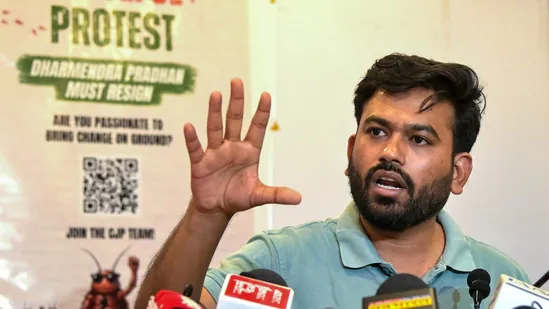
Attackers Who Slapped Abhijeet Dipke at CJP Jaipur Protest Garlanded After Release | Video
Bharatmorningnews.com – The attackers who slapped Abhijeet Dipke during a peaceful protest in Jaipur recently became the subject of widespread public attention after being released from custody. A viral video captured the moment they were celebrated by their supporters, who garlanded the men and chanted slogans such as “Inquilab Zindabad” and “Bharat Mata Ki Jai” as they exited the police station. This unexpected display of support raised questions about the motivations behind the violence and the broader implications for the Cockroach Janta Party (CJP) protests. The incident has sparked renewed discussions about the role of social media in amplifying political tensions and the symbolic significance of the attackers’ release.
Details of the CJP Protest and the Assault
The assault occurred on June 15 during a demonstration in Jaipur, organized by the Cockroach Janta Party to advocate for educational reforms and government accountability. Abhijeet Dipke, the party’s founder, was entering the protest site when two individuals approached him, yanked his scarf, and administered multiple slaps before being overpowered by his supporters. The attackers were immediately apprehended by local authorities, but their release later triggered a mix of reactions from the public and media. The video of the incident, which shows Dipke’s physical altercation, has since gone viral, drawing both sympathy and criticism for its portrayal of the event.
Abhijeet Dipke’s Statement and Resilience
Abhijeet Dipke took to social media to address the attack, reaffirming his commitment to the cause. He stated,
“I was assaulted while entering the protest site. No matter how many attacks take place, I will not raise my hand against anyone. Cowards resort to violence.”
Dipke further emphasized that the attackers’ actions were not just an act of aggression but a reflection of the broader political climate. He added,
“You call me Pakistani, you call those gathered here Pakistani, and you even label journalists who ask questions as Pakistani. But we will not be intimidated by such tactics. We will continue to raise our voice for the youth.”
These statements underscored Dipke’s resolve to remain steadfast in his advocacy despite the challenges posed by the attack.
The Viral Video and Public Sentiment
The video documenting the attackers who slapped Abhijeet Dipke has become a focal point of public discourse. It not only captured the immediate aftermath of the assault but also highlighted the contrasting reactions of Dipke’s supporters and the attackers’ allies. While some viewed the footage as a display of solidarity with the accused, others criticized the celebration as a sign of political polarization. Social media platforms were flooded with comments from netizens, with many expressing admiration for Dipke’s courage and others calling for stricter measures against the attackers. The video’s rapid spread across online networks has amplified the visibility of the incident, making it a key topic in discussions about freedom of speech and protest dynamics in Jaipur.
Broader Implications for the CJP Movement
The incident has deepened the divide within the Cockroach Janta Party’s ranks, with some members defending the attackers as patriots and others condemning the act as an attempt to undermine the party’s message. The protest, which initially aimed to demand educational reforms, has now become intertwined with nationalistic sentiments. Analysts suggest that the attackers’ release may serve as a strategic move to rally support for the CJP’s cause by associating it with resistance against perceived external threats. Meanwhile, Dipke’s supporters have continued to emphasize the importance of the protest, framing it as a necessary step in the struggle for change.
Following the release of the accused, the situation in Jaipur remains tense. The attackers who slapped Abhijeet Dipke have been embraced by some as symbols of grassroots activism, while others see them as opportunists exploiting the moment. This dichotomy reflects the broader debate about the role of violence in political expression and the power of media in shaping public perception. As the Cockroach Janta Party moves forward, the incident is likely to influence the trajectory of its protests and the public’s view of its leadership. The video’s impact is expected to persist, with ongoing discussions about whether it strengthens or weakens the party’s position in the regional political landscape.