
Why the June 2026 Super New Moon could be the best night for stargazing
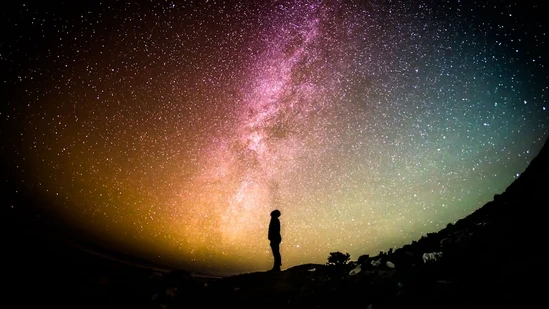
Why the June 2026 Super New Moon Could Be the Best Night for Stargazing
Bharatmorningnews.com – The June 2026 Super New Moon presents an exceptional opportunity for stargazers to witness the cosmos in its most pristine state. Occurring on June 15, 2026, this celestial event marks the moment when the Moon reaches its closest point to Earth during the New Moon phase. While the Super New Moon itself will not be visible to the naked eye, its significance lies in the dark skies it creates, which provide unparalleled clarity for observing celestial phenomena. Unlike the bright Full Moon, which bathes the night in light, the New Moon’s near-total absence of illumination allows for a clearer view of the stars, planets, and even the faintest deep-sky objects.
Optimal Conditions for Celestial Observation
During the June 2026 Super New Moon, the Moon will be positioned between the Earth and the Sun, making it nearly invisible to observers. This alignment ensures that the sky is at its darkest, offering ideal conditions for those seeking to explore the universe’s secrets. The reduced light pollution allows for deeper exploration of the night sky, making it a prime time to spot stars, constellations, and even the Milky Way’s radiant glow. For astronomy enthusiasts, this event could be the perfect moment to capture images of the cosmos or observe celestial events that are usually hidden by moonlight.
Stargazing during a New Moon is particularly rewarding because it minimizes the interference of moonlight. This means that faint celestial objects, such as distant galaxies, nebulae, and planetary alignments, become more visible. The June 2026 Super New Moon is expected to coincide with some of the most favorable weather conditions, further enhancing the experience. With the Moon out of the picture, the Earth’s natural darkness allows for a more immersive view of the night sky, which is essential for both amateur and professional astronomers.
The Science Behind the Super New Moon
The term “Super New Moon” refers to the Moon’s closest approach to Earth during its New Moon phase, a phenomenon that occurs approximately every 14 months. This event is distinct from the more familiar Supermoon, which happens when the Moon is at its farthest point from Earth but still appears larger and brighter in the sky. The June 2026 Super New Moon will be a rare occurrence, combining the Moon’s proximity with the New Moon’s darkness to create a unique astronomical setting. While the Moon’s phases are a result of its orbital position relative to the Sun and Earth, the Super New Moon emphasizes the interplay of these positions, offering stargazers a chance to witness the universe in its most unobstructed form.
Experts emphasize that the June 2026 Super New Moon will not only reduce light pollution but also enhance the visibility of the night sky’s natural beauty. This period could be ideal for observing the Summer Triangle, a prominent constellation visible in the Northern Hemisphere, or for spotting planets like Venus, Mars, and Jupiter at their brightest. Additionally, the event may align with meteor showers or other astronomical phenomena, making it a particularly special night for those who love to explore the night sky. The combination of darkness, clarity, and favorable weather conditions could make the June 2026 Super New Moon one of the most memorable stargazing events in recent years.
Maximizing Your Stargazing Experience
To fully appreciate the June 2026 Super New Moon, it’s recommended to choose a location with minimal light pollution. Urban areas often have artificial lights that can drown out the natural beauty of the night sky, so rural or remote spots are preferable. The event will be visible across much of the globe, but its impact may vary depending on the local weather and atmospheric conditions. Stargazers should also consider the time of night, as the sky will be darkest around midnight, making it the optimal hour for observation.
Equipped with binoculars or a telescope, enthusiasts can explore the cosmos in greater detail. The