
Chandigarh pitched as model ‘Viksit Bharat’ city at NITI Aayog meet
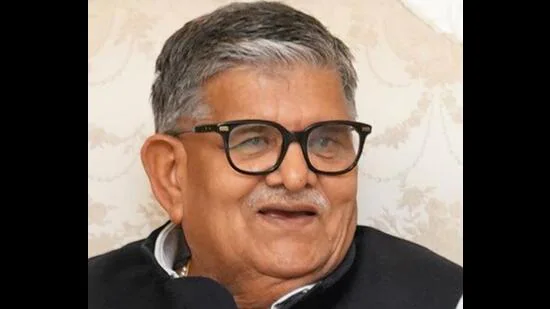
Chandigarh Pitched as Model ‘Viksit Bharat’ City at NITI Aayog Meeting
Urban Development and National Vision
Bharatmorningnews.com – At the 11th governing council meeting of NITI Aayog in New Delhi, Union Territory administrator Gulab Chand Kataria highlighted Chandigarh as a flagship example of sustainable urban development aligned with the Viksit Bharat@2047 vision. The event, hosted at the Rashtrapati Bhavan Cultural Centre, brought together leaders to discuss strategies for achieving India’s developmental goals by 2047, with Chandigarh serving as a case study for innovative governance and inclusive growth. Kataria emphasized how the city’s meticulous planning and infrastructure upgrades have made it a benchmark for other urban centers aiming to replicate its success.
Chandigarh’s unique position as a model Viksit Bharat city stems from its historical role as a planned city, designed by Le Corbusier, and its ongoing efforts to modernize while preserving its cultural and environmental ethos. The administrator noted that the Union Territory’s achievements in urban mobility, green spaces, and efficient public services have set a standard for other cities. This focus on holistic development has enabled Chandigarh to not only meet national targets but also exceed them in several key areas, making it a critical reference point for the NITI Aayog’s broader urban transformation agenda.
Education and Innovation
Chandigarh’s educational initiatives have been a cornerstone of its development, with the Union Territory administrator showcasing its progress in academic excellence and technological readiness. The city’s Class 10 pass rate has surged to 88.25%, reflecting a strong emphasis on quality education and student performance. Programs like Project Udaan and Shikhar-26 have provided free coaching for JEE and NEET exams, significantly boosting access to higher education for underprivileged students. These efforts underscore Chandigarh’s role as a model Viksit Bharat city, where innovation in education is being integrated into the national framework.
“The Union Territory has achieved near-universal literacy, with a literacy rate of 99.93%, and maintains the top Prachesta-1 grade in the Ministry of Education’s performance grading index for two consecutive years,” Kataria remarked. This success is attributed to Chandigarh’s investment in smart classrooms, digital learning tools, and partnerships with private institutions to enhance educational outcomes. The administrator also highlighted the city’s new focus on artificial intelligence, machine learning, cyber security, and data analytics, positioning it as a hub for future-ready education in the country.
Healthcare and Community-Driven Progress
Chandigarh’s healthcare system has become a standout example of community-centric urban development, further reinforcing its status as a model Viksit Bharat city. The administrator cited the success of Project SARATHI, which engages over 2,671 National Service Scheme (NSS) volunteers to support patients in government hospitals. This initiative has not only improved patient care but also fostered a culture of civic participation, with its model being replicated in more than 1,400 healthcare facilities across India. Such community-driven approaches are integral to Chandigarh’s strategy for equitable growth and accessible healthcare.
Chandigarh’s healthcare advancements extend beyond volunteer programs, with the Union Territory reporting a higher education gross enrolment ratio of 64.8%, surpassing the national average. This reflects the city’s commitment to building a skilled workforce and ensuring that its residents have access to advanced medical and academic opportunities. The administrator emphasized that these efforts align with the Viksit Bharat@2047 mission, focusing on improving public services and creating a society where every citizen can thrive.
Environmental Sustainability and Green Initiatives
Chandigarh’s environmental achievements have placed it at the forefront of sustainable urban living, with its initiatives gaining national recognition. The city ranked eighth in the Swachh Vayu Survey 2025, a testament to its success in maintaining clean air and reducing pollution levels. Additionally, Chandigarh has become the first Union Territory to fully solarize its government buildings, significantly cutting carbon emissions and energy costs. This commitment to green energy is a vital component of its model Viksit Bharat framework, demonstrating how eco-friendly practices can be scaled in urban settings.
“Chandigarh is the first Union Territory to fully privatize electricity distribution and has enhanced clean mobility through the introduction of electric buses,” Kataria added. The administrator also highlighted the city’s plans to host the 2027 Asian Relay Championships, showcasing its infrastructure and dedication to sports development. These achievements, both in sustainability and sports, exemplify how Chandigarh is integrating modernity with tradition, offering a scalable blueprint for other cities striving to meet the Viksit Bharat@2047 goals.
Economic and Social Development
Chandigarh’s economic growth has been another highlight, with the Union Territory administrator noting its success in attracting industries and creating employment opportunities. The city’s strategic location and well-developed infrastructure have made it a thriving hub for technology, manufacturing, and services, contributing to its status as a model Viksit Bharat city. Kataria also emphasized Chandigarh’s efforts in social welfare, including housing schemes and public transportation upgrades, which have improved the quality of life for its residents.
Chandigarh’s status as India’s first slum-free city, achieved through comprehensive rehabilitation efforts, further solidifies its position as a model for inclusive urban development. The administrator reiterated the UT’s commitment to aligning with the Viksit Bharat@2047 vision, which prioritizes human capital development, governance reforms, and sustainable progress. By integrating these principles, Chandigarh has become a living example of how a city can transform itself while serving as a catalyst for national development, offering valuable insights to other urban centers.