
Comedian booked for sexual harassment over remarks during live show
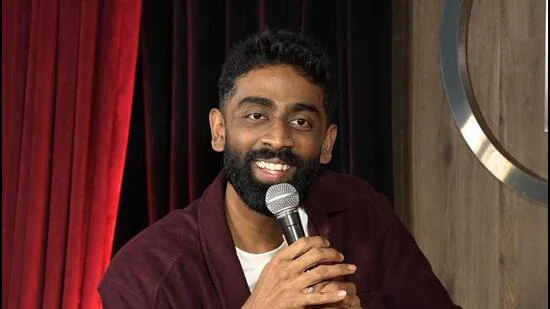
Comedian Booked for Sexual Harassment Over Remarks During Live Show
Incident and Charges in Mumbai
Bharatmorningnews.com – In a recent incident that has sparked widespread discussion, comedian Pranit More was booked for sexual harassment following remarks made during a live comedy show in Mumbai. The Maharashtra Cyber Police, in collaboration with the National Commission for Women (NCW), has taken legal action against More and two others, including audience member Himanshu Jangra, for their alleged actions. The case stems from videos circulating online, which depict the incidents during a performance at a local venue. These videos, which have garnered significant attention on social media platforms, are believed to capture moments where the comedian and Jangra made comments that were perceived as coercive and disrespectful toward women.
The NCW has been actively involved in the investigation, calling both More and Jangra for questioning. The commission is examining claims that their remarks during the show glorified non-consensual behavior, thereby undermining the importance of consent and the dignity of women. The videos reportedly show Jangra describing a scenario where he spent ₹370 on biryani during a date and expected physical intimacy in return, framing it as a form of sexual coercion. This incident has ignited debates about the boundaries of humor and its potential to perpetuate gender-based stereotypes.
Doctor’s Remarks and Public Decency Standards
In addition to the comedian’s case, another individual, Dr. Sejal Pawar, a medical professional, has been accused of making obscene and derogatory remarks about deceased male bodies and medical cadavers used for educational purposes. The remarks, which were captured on video, were deemed disrespectful to the deceased’s dignity and inconsistent with public decency standards. This case has further highlighted the need for sensitivity in discussions around body autonomy and the role of education in shaping societal attitudes.
The police have cited these videos as evidence of the accused individuals’ actions, leading to charges under multiple sections of the Bharatiya Nyaya Sanhita (BNS) and the Information Technology Act. The comedian and Jangra are accused of disseminating content that trivializes issues of consent and dignity, while Dr. Pawar faces charges for remarks that were considered offensive and inappropriate for the context of medical education. These legal actions underscore the growing emphasis on holding individuals accountable for their words, especially in public forums where influence is significant.
The case has prompted a broader conversation about the impact of social media in amplifying incidents of sexual harassment and obscenity. With videos shared rapidly across platforms, the public has been able to scrutinize the behavior of the accused, leading to increased pressure on authorities to act swiftly. The Maharashtra Cyber Police has emphasized the role of online content in bringing these issues to light, stating that such videos serve as critical evidence in modern legal proceedings.
“The videos clearly show a pattern of behavior that can be seen as sexual harassment, with the accused individuals portraying women as objects of desire in exchange for monetary gestures,” remarked a Maharashtra Cyber Police officer. This statement has been widely cited in media reports and social media discussions, reinforcing the gravity of the situation.
The legal framework in place includes sections 75, 294, 353, and 354 of the BNS, which address various forms of sexual harassment and obscenity. Additionally, section 67 of the Information Technology Act penalizes the dissemination of indecent content online. These provisions have been instrumental in allowing authorities to file charges against the individuals involved. The case also highlights the intersection of digital media and traditional legal systems in addressing contemporary issues of gender-based misconduct.
Public reaction to the case has been mixed, with some praising the swift action taken by the authorities and others criticizing the perceived trivialization of serious issues. The incident has raised questions about the balance between artistic expression and the responsibility to respect individuals’ autonomy. As the investigation continues, the focus remains on the impact of these remarks on public perception and the legal implications for those who engage in such behavior. The broader society is now reflecting on the need for accountability in both personal and professional spaces, particularly where power dynamics are at play.