
India ready for ‘every kind of strike’ against terrorism: Defence minister Rajnath Singh warns Pakistan
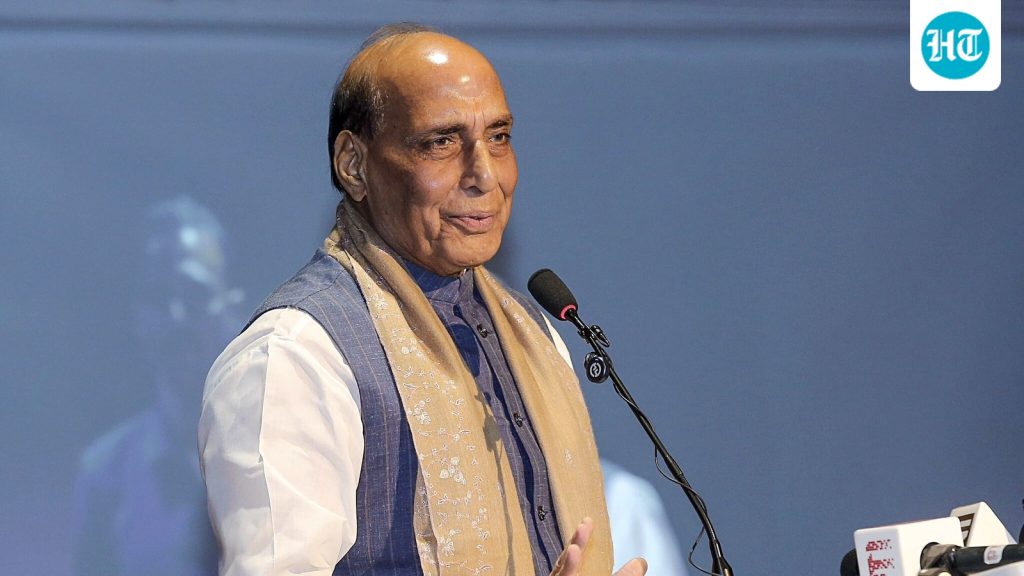
India Ready for Every Kind of Strike Against Terrorism
Bharatmorningnews.com – Defence Minister Rajnath Singh said India is ready for every kind of strike against terrorism if Pakistan continues what he described as a state policy of backing terror activities. Speaking at the NDTV Defence Conclave, Singh said India seeks peace but will not compromise on national security.
His remarks came as terrorism, cross-border security and India’s right to defend itself remain central issues in its engagement with Pakistan and at international forums.
“India believes in peace. India never wants war. India never wants to capture the land of any foreign country in the world.”
Peace does not mean weakness
Singh said India does not wish to threaten other nations or take foreign territory. However, he stressed that the country’s preference for peace must not be seen as an inability to respond when its security is under threat.
“India wants peace, but India will not compromise on its security under any circumstances.”
The defence minister said India supports dialogue, but added that meaningful talks cannot continue if another country provides shelter or support to groups carrying out terrorism against India.
“India believes in dialogue, but if any country gives shelter to terrorism against India, then the scope of dialogue ends right there.”
Warning to Pakistan over terror policy
Addressing Pakistan, Singh said India is ready for every kind of strike against terrorism for as long as its neighbour follows a policy that supports such activity. The statement reflected New Delhi’s position that terrorism cannot be separated from wider bilateral relations.
India has repeatedly argued that cross-border terrorism must be addressed before relations with Pakistan can improve. Singh’s comments reinforced the government’s view that national security will guide its approach to dialogue and regional engagement.
He also referred to Prime Minister Narendra Modi’s remarks at the Shanghai Cooperation Organisation Summit in Bishkek. Modi had called for a clear global message that terrorism must never be used as a strategic tool.
At the summit, Modi urged countries to act against the wider infrastructure behind terrorism, including funding, recruitment, radicalisation and safe havens. He also called for an international response free from double standards.
Strategic autonomy remains a priority
Beyond counterterrorism, Singh outlined India’s approach to defence cooperation and international partnerships. He said India supports stability and collaboration, but only when they protect the country’s national interests.
India, he said, would not sacrifice its strategic autonomy in the name of global cooperation. The country’s foreign and security policy, he added, is intended to preserve independent decision-making while supporting peace and stability.
“India wants global stability, but not at the cost of its strategic autonomy.”
India’s role in a changing world
Singh also discussed the “Thucydides Trap,” an idea often used to describe tensions between an established power and a rising power. He said this framework offers too narrow a view of India’s place in international affairs.
Rejecting the suggestion that India should be defined as either a status-quo power or a revisionist power, Singh described the country as a civilizational power with a broader historical perspective.
“India is neither a status-quoist power nor a revisionist power. I believe we are a civilizational power.”
The minister said this outlook shapes India’s approach to global affairs, security partnerships and the fight against terrorism. India ready for every kind of strike against terrorism, he indicated, remains part of a larger policy focused on peace, sovereignty and national security.
FAQ: Rajnath Singh’s Remarks on Terrorism
What did Rajnath Singh say about Pakistan?
Rajnath Singh said India would act against terrorism as long as Pakistan continued what he called a state policy of supporting terrorism directed at India.
Does India support dialogue with Pakistan?
Singh said India believes in dialogue, but maintained that the scope for talks ends when terrorism against India receives shelter or support.
What does India’s strategic autonomy mean?
Strategic autonomy refers to India’s ability to make independent decisions on defence, foreign policy and security cooperation while pursuing partnerships that serve national interests.