
Delhi to tighten PUC enforcement from October 1; Burari ATS inaugurated
Delhi to Step Up “No PUC, No Fuel” Checks From October 1
Bharatmorningnews.com – Delhi is preparing to enforce its “No PUC, No Fuel” rule more rigorously from October 1, linking access to fuel with possession of a valid Pollution Under Control certificate. The move is intended to curb emissions from vehicles and make pollution-control checks a regular part of the city’s environmental strategy rather than a response limited to the winter season.
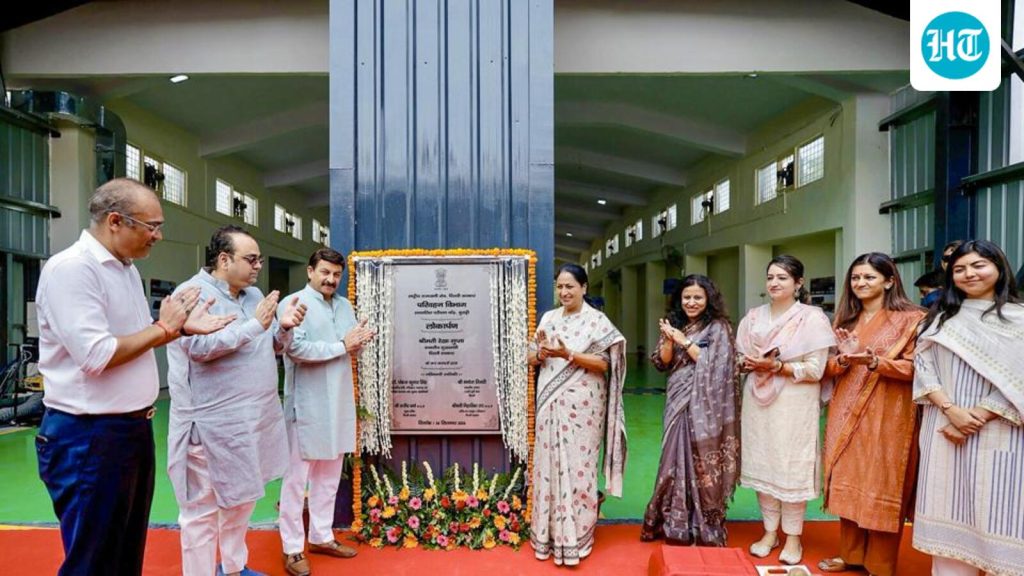
Chief minister Rekha Gupta announced the renewed enforcement drive on Saturday while opening a new Automated Testing Station in Burari. The facility, described as among the country’s largest, has five testing lanes and is designed to inspect up to 100,000 vehicles each year.
Technology-led vehicle monitoring
The Burari centre will assess about 40,000 heavy vehicles and 60,000 light motor vehicles annually. Its automated systems will examine key roadworthiness and pollution-related elements, including braking performance, suspension, headlights, side-slip, emissions and the underside of each vehicle.
Gupta said the administration wants testing and oversight of vehicle emissions to rely more heavily on technology. The government also plans tighter technology-based supervision of PUC centres, an effort aimed at strengthening confidence in the certificates issued to motorists.
“Temporary measures taken only during winter will not be enough to address Delhi’s pollution. The government has taken pollution control up as a continuous, year-round process.”
Under the policy, a vehicle without an active PUC certificate can be refused fuel. The approach places a direct responsibility on vehicle owners to keep their emissions documents current before visiting petrol pumps.
The Commission for Air Quality Management has directed that the arrangement be expanded throughout the National Capital Region from October 1. That wider rollout would bring the rule beyond Delhi’s borders, reflecting the regional nature of air pollution and daily vehicle movement across the NCR.
Third automated testing facility in Delhi
Transport minister Pankaj Kumar Singh said the Burari station is Delhi’s third automated vehicle-testing centre, following facilities at Nand Nagri and Tehkhand. Together, the three centres will take the city’s annual automated testing capacity beyond 250,000 vehicles.
The new Burari facility was developed in roughly a year and will give commercial vehicle owners in north Delhi easier access to automated fitness testing. Commercial vehicles are required to meet fitness standards, making the location significant for operators who previously had to travel farther across the city for testing.
The Tehkhand Automated Testing Station was inaugurated earlier this month and can inspect around 72,000 vehicles in a year. With Burari now added to the network, Delhi’s transport infrastructure has a larger automated base for evaluating vehicles used on its roads.
“The objective is not merely to discuss the problem of pollution, but to take concrete, long-term and effective steps to control it.”
From seasonal action to year-round enforcement
Delhi actively applied the “No PUC, No Fuel” policy in December 2025, when severe winter pollution intensified concern over vehicle emissions. The measure was later adopted as a permanent, all-season policy, although enforcement has not remained consistently strict.
The October 1 push signals an attempt to close that gap. PUC certificates are meant to show that a vehicle’s emissions are within the applicable limits, while automated testing stations examine a broader range of mechanical and safety-related conditions. Used together, the two systems can help authorities identify vehicles that require maintenance, testing or compliance action.
For drivers, the immediate implication is straightforward: a valid PUC certificate will be essential before refuelling. Vehicle owners may need to check expiry dates in advance, particularly as monitoring becomes more technology-driven and enforcement becomes more visible at fuel stations.
Gupta said the government is pursuing several pollution-control measures at the same time. These include sustainable transport, increasing green cover, electric mobility, waste management and technology-enabled monitoring. The emphasis is on addressing multiple contributors to poor air quality rather than relying on a single intervention.
Delhi’s pollution challenge is often most visible in winter, but emissions from vehicles remain an issue throughout the year. Strengthening PUC verification and expanding automated fitness-testing capacity are intended to create a more continuous system of compliance, inspection and accountability for the city’s large vehicle population.
Related Reading
Frequently Asked Questions
What is Delhi to tighten PUC enforcement?
Delhi to tighten PUC enforcement is the main topic of this guide. The article explains the context, practical details, and next steps readers should understand.
Why does Delhi to tighten PUC enforcement matter?
Delhi to tighten PUC enforcement matters because readers are looking for a useful answer, not just a short summary. Good content should match search intent and help them decide what to do next.