
A distress network for seafarers at sea: What Modi proposed at BRICS, and why India needs it
Why India Needs a Distress Network for Seafarers
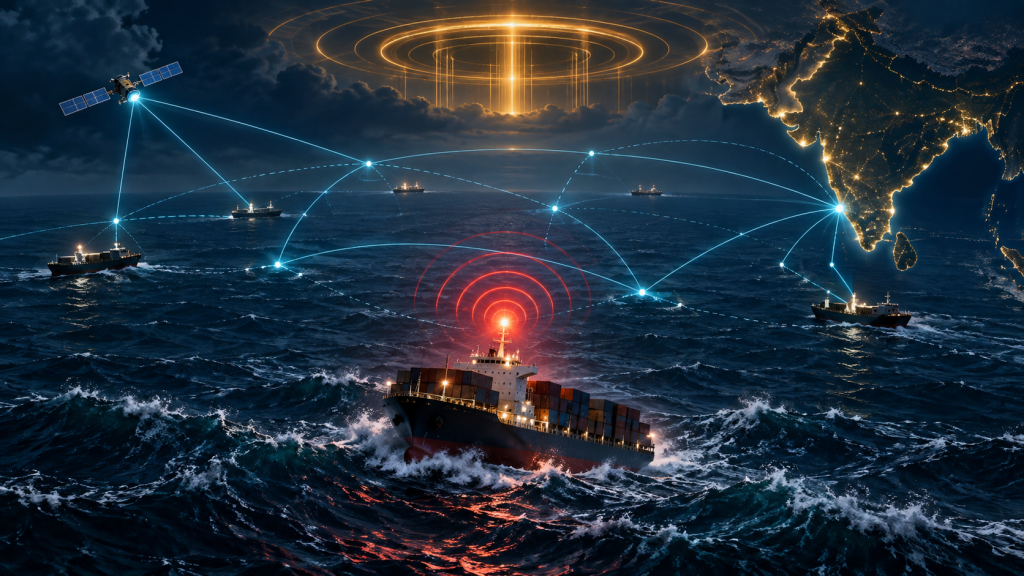
Bharatmorningnews.com – A distress network for seafarers could give merchant crews faster, coordinated help when conflict or an emergency threatens ships far from home. At the BRICS Summit, Prime Minister Narendra Modi proposed a Seafarers Emergency Support Network linking maritime authorities and diplomatic missions in participating countries.
Merchant seafarers are essential to global trade, transporting cargo, containers and energy supplies across some of the world’s busiest routes. Yet crews can face severe danger when attacks, armed conflict or medical emergencies occur at sea.
“Seafarers contribute significantly to global trade, but they often lack support in difficult times,” Modi said.
The proposed network could receive distress calls, coordinate medical assistance, keep families informed and support evacuation efforts where required. For Indian sailors serving on vessels registered in many different countries, such cooperation could be especially important.
India’s major role in the global seafaring workforce
India has the world’s second-largest seafaring workforce after the Philippines. The BIMCO-ICS Seafarer Workforce Report 2026 put India’s seafaring population at 311,936, or 12.16% of the global commercial-shipping workforce of 2.57 million people.
Indian officers account for 13.41% of the global total. Their responsibilities include navigation, vessel command and engineering operations, making Indian personnel central to the day-to-day functioning of international commercial fleets.
This global presence also leaves Indian families vulnerable when key sea lanes become unsafe. A sailor may work for an overseas company aboard a foreign-flagged ship, but still depend on Indian diplomatic missions and authorities for consular support in a crisis.
Risks in West Asia and the Black Sea
Conflict in West Asia and the Black Sea has increased the risks faced by commercial vessels and their crews. At least 15 Indian seafarers died across the two conflict zones over a nine-month period.
Minister of State for External Affairs Kirti Vardhan Singh told the Rajya Sabha on July 30 that 10 Indian seafarers had been killed in West Asia after the conflict began earlier in 2026. The wider toll in the region included 16 Indian deaths, with eight in Oman, four in the United Arab Emirates, two in Kuwait, and one each in Saudi Arabia and Iraq. Authorities also reported 75 injured Indians, most of them hurt on land.
The Strait of Hormuz has been a particular concern. The narrow waterway at the entrance to the Persian Gulf is vital for oil shipments from the Middle East, while Oman lies along its southern side. Attacks have frequently taken place near Omani waters.
On July 12, the Cyprus-flagged container ship GFS Galaxy was attacked near Oman. Its hull and engine room were damaged, and the vessel lost propulsion and steering. An Indian third engineer went missing and was later confirmed dead.
Three ships were attacked off Oman within hours on the night of July 20. Missiles struck the tankers Kavomaleas and Acheloos, while the Kuwait-flagged Kaifan was hit by an unidentified projectile at Limah Anchorage. An Indian second engineer required hospital treatment.
On August 18, the Liberia-flagged bulk carrier Minoan Dignity was attacked five nautical miles off Oman while travelling outward. Its chief engineer was killed, and the Omani Coast Guard assisted the remaining crew.
Why a coordinated maritime response matters
Ministry of Ports, Shipping and Waterways status bulletins showed that between 125 and 480 Indian seafarers were aboard Indian-flagged vessels in the Persian Gulf region on a typical summer day. A further 253 could be on ships in the Gulf of Oman.
These figures exclude many Indians working on foreign-flagged vessels. By August 18, shipping companies had withdrawn 4,144 Indian seafarers from the region. Authorities had also recorded 45 attacks involving Indian-flagged vessels or foreign vessels carrying Indian crew, up from 23 by mid-June.
A distress network for seafarers would not eliminate the dangers of war zones, but it could improve communication between governments, ship operators, rescue agencies and families. Faster information-sharing may help authorities identify affected crew members, arrange treatment and coordinate safe evacuation.
Frequently Asked Questions
What is a distress network for seafarers?
It is a proposed coordinated support system for sailors facing emergencies at sea. It could connect maritime agencies and diplomatic missions to manage distress calls, medical needs, family updates and possible evacuations.
Why is the proposal important for India?
India supplies a large share of the global commercial-shipping workforce, including a significant number of officers. Indian crew members work on ships across international routes, including areas affected by conflict.
What should families do if an Indian seafarer faces an emergency?
Families should contact the sailor’s shipping company and seek assistance through relevant Indian authorities or diplomatic missions. A coordinated emergency network could make it easier to obtain verified updates and connect families with the agencies handling the response.