
Asian Games: Indian shooters target more gold from a young squad
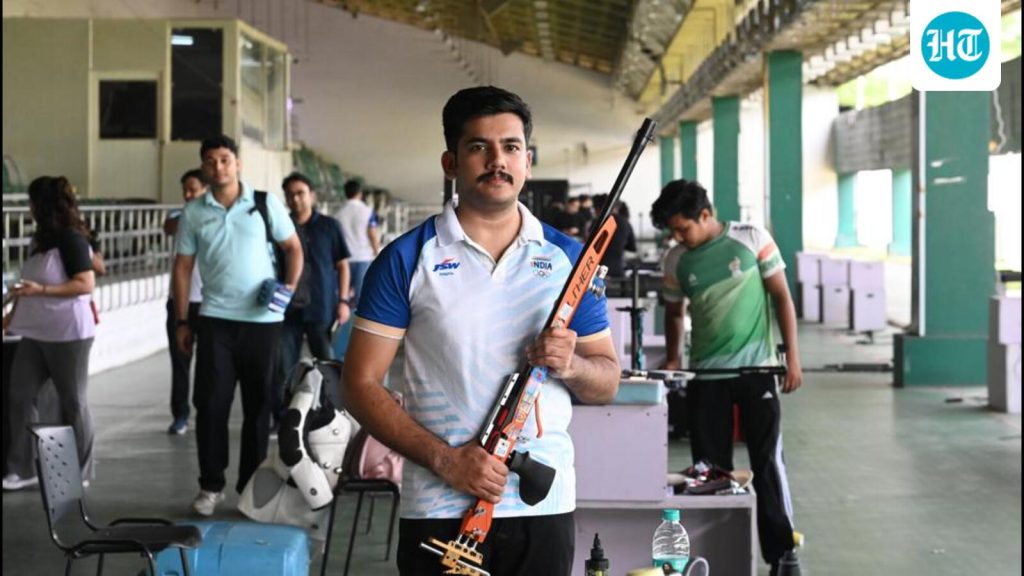
India’s young shooting contingent aims to build on Hangzhou success at the Asian Games
Bharatmorningnews.com – India will head into the upcoming Asian Games with a youthful rifle and pistol squad carrying both expectation and opportunity. The country’s shooting programme was a major driver of its medal push at the 2023 Asian Games in Hangzhou, where shooters collected 22 medals, including seven gold, nine silver and six bronze.
That performance marked a striking improvement in India’s Asian Games shooting record. Before Hangzhou, the last time Indian shooters had returned with a double-digit medal count was at the 2006 Doha Games, where they won 14 medals. The 2018 Jakarta edition featured only mixed team shooting events, making the Hangzhou haul an especially important benchmark.
Only six members of the group that delivered those 22 medals are in the current rifle and pistol contingents. Their experience will be paired with a large group of newcomers, with 10 athletes set to make their Asian Games debut.
Experience alongside a fresh generation
Rifle shooters Rudrankksh Patil, Aishwary Pratap Singh Tomar and Ashi Chouksey return after competing in Hangzhou. In pistol, Manu Bhaker, Esha Singh and Anish Bhanwala provide the established names. Their presence will be valuable in an event where individual scores also contribute to team outcomes.
The debutants include the full Indian men’s 10m air pistol team of Kedarling Balakrishna Uchaganve, Aakash Bharadwaj and Kamaljeet. Parth Mane and Himanshu Dhillon form part of the men’s air rifle line-up, while Sonam Maskar and Vidarsa K Vinod are included among the women’s air rifle shooters. Niraj Kumar and Tilottama Sen have been selected for rifle 3 positions.
Suruchi Singh, among the most promising young pistol shooters in the country, will also make her Asian Games appearance. Her recent results have strengthened India’s outlook in the women’s pistol events.
Suruchi won 10m gold at the Munich World Cup, where Esha Singh earned silver on the same podium. Esha also set a world record in the 25m event at that competition. They are joined in a strong women’s pistol unit by Manu Bhaker, a double medallist at the Paris Olympics.
Bhaker and Esha are scheduled to compete in both 10m and 25m disciplines. In the 25m event, they will be alongside Rahi Sarnobat, who won Asian Games gold in 2018. That combination gives India a group with international success, Olympic achievement and Asian Games experience.
Gold medal ambitions
The women’s pistol group and the men’s rifle 3 positions team are expected to carry a substantial share of India’s medal hopes. Tomar and Patil bring important experience to the men’s 3P challenge, a discipline in which composure and consistency across multiple shooting positions can prove decisive.
“This time, the number of gold should be better. We have a strong team overall, especially our pistol women’s and 3P men’s teams are really very strong,” said national rifle coach Deepali Deshpande.
For a squad containing many first-time Asian Games competitors, team events can offer both pressure and support. Deshpande believes the returning rifle shooters can help the newer athletes manage the demands of a major multi-sport competition.
“Though our sport is very individual, it matters who stands alongside you as part of the team. Otherwise, when everyone is as young or new as you, there’s a lot of pressure and responsibility on your shoulders,” said Deepali.
The newer names have not arrived without international preparation. India used World Cup competitions to expose a wider pool of shooters to unfamiliar ranges, conditions and competitive situations. That approach was designed not only for the Asian Games, but for the longer build-up towards the 2028 Los Angeles Olympics.
“Himanshu, Parth, Vidarsa, they may be new to the Asian Games, but when it comes to their level, they are on a par with everyone. Our idea to give them exposure in World Cups was to make them shoot in different situations and conditions and help break those barriers,” she said.
World Cup exposure shapes the next cycle
For roughly the past year and a half, the shooting programme has deliberately used separate “A” and “B” teams to create more international opportunities. The intention has been to assess a larger group rather than concentrate all major events around a small number of established athletes.
Across three World Cups this year, Indian shooters won one medal in Granada, four in Munich and four in Hangzhou. Three of those medals came in mixed team events. The individual medal winners were Suruchi, Esha and Sainyam Vij, all in pistol. Sonam and Himanshu also won bronze together in the 10m air rifle mixed team event in Hangzhou.
Those results underline why pistol is viewed as a major medal avenue, while the rifle contingent is being developed with a longer horizon in mind. Olympic quota events for Los Angeles 2028 will begin soon after the continental competition, leaving little time for emerging shooters to adjust to the international stage.
“We were observing everyone, especially the newcomers, on how they handled situations, reacted to international arenas and other such aspects,” said Deepali. “I think all that exposure will definitely translate into results at the Asian Games.”
India’s challenge will be to turn a promising mix of youth and experience into a medal total that can approach, or surpass, the Hangzhou standard. With an expanded pool of shooters tested in World Cup competition and several proven performers leading key events, the squad has a realistic platform to chase more gold.
Related Reading
Frequently Asked Questions
What is Asian Games?
Asian Games is the main topic of this guide. The article explains the context, practical details, and next steps readers should understand.
Why does Asian Games matter?
Asian Games matters because readers are looking for a useful answer, not just a short summary. Good content should match search intent and help them decide what to do next.