
‘Can’t accept Ranbir Kapoor as Lord Rama’: Ramanand Sagar’s grandson Shiv Sagar says ‘fresh face’ was needed in Ramayana
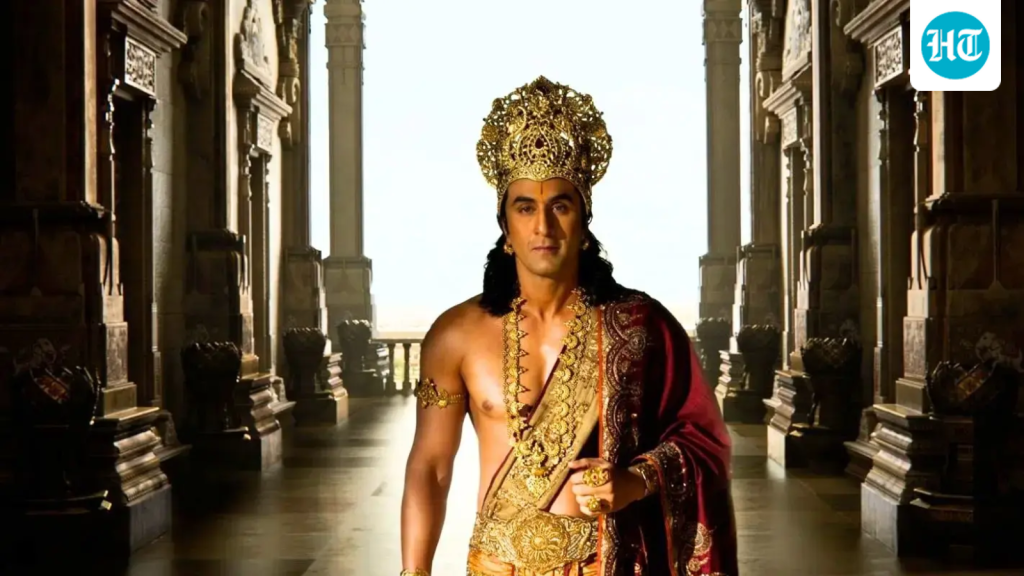
Grandson of the Man Who Defined Rama on Indian Television Questions Ranbir Kapoor’s Casting in New Ramayana
Bharatmorningnews.com – The announcement that Ranbir Kapoor would portray Lord Rama in Nitesh Tiwari’s ambitious two-part cinematic adaptation of the Valmiki epic sent ripples through Bollywood’s fan communities. The teaser and first-look visuals that followed drew a sharply divided response: some viewers embraced the choice with enthusiasm, while others questioned whether a star already steeped in contemporary, often gritty character work could convincingly inhabit the serene, idealized figure of Ayodhya’s prince. Now the debate has acquired a new and particularly resonant voice — Shiv Sagar, grandson of Ramanand Sagar, the director whose 1987 Doordarshan serial Ramayan remains the single most culturally embedded depiction of the epic in Indian popular memory.
A Legacy That Shapes Every New Interpretation
For generations of Indian households, the face of Rama was inseparable from the 1987 television series and its 1990 sequel, Lav-Kush. Ramanand Sagar’s production, broadcast across the country during prime-time hours, did not merely adapt scripture; it became a shared cultural reference point, a moral compass for millions of viewers who grew up pausing the television to perform aarti before the screen. Arun Govil, who embodied the deity in that landmark production, carries such weight in the public imagination that any subsequent cinematic attempt to portray the same character is measured, consciously or not, against his image. It is against this backdrop that Shiv Sagar’s comments land with particular force.
The “Baggage” Argument
Shiv Sagar, who works as a director and producer in his own right, made his position clear in recent remarks carried by ANI. His objection is not aimed at Kapoor’s talent but at the associative residue his recent screen persona leaves behind. Specifically, the filmmaker pointed to Kapoor’s performance in Animal, a role defined by aggression and moral ambiguity, as incompatible with the spiritual stillness the character of Rama demands.
“Except for that one casting, I like the rest of the casting very much. Personally, I cannot accept Ranbir Kapoor as Ram because after Animal, I cannot accept him as Ram. We have seen Ranbir in different roles; he is a very good actor. Personally, I don’t have anything against him. I think they must have taken him for the project because they want a marketing push, and maybe if they didn’t take Ranbir, the film wouldn’t have been marketed so well, so that’s also something to think about, but I personally believe that for such characters, it’s better to take a new face.”
The concept of “baggage” in casting — the idea that an actor’s prior associations travel with them into every subsequent role — is a well-worn principle in Indian television and theatre. Sagar’s own serials, he noted, routinely selected relatively unknown performers for divine roles precisely so that viewers would encounter the character without pre-existing cinematic associations clouding their perception.
“You can take a very strong supporting cast, like Yash is looking very good, Sai Pallavi is looking very good, they don’t have that much baggage. He has a lot of baggage. That’s why we usually take a new face in our serials, so they don’t have any baggage or history.”
Praise for the Supporting Ensemble
While his reservations about the lead were pointed, Shiv Sagar was effusive in his approval of the surrounding cast. Yash, the Kannada superstar, has been attached to play Ravana, the ten-headed king of Lanka, while Sai Pallavi will embody Sita. Both, in Sagar’s assessment, bring the requisite gravitas without the complicating history that a larger Bollywood name might impose. Ravie Dubey and Sunny Deol round out the principal cast in significant supporting roles.
Notably, Arun Govil — the actor who gave the 1987 Rama his face — appears in this new adaptation as King Dashrath, Rama’s father. The casting choice is a quiet nod to continuity: the man who once was Rama now plays the father of the new Rama, linking two eras of Indian storytelling in a single frame.
Marketing Logic Versus Spiritual Purity
Shiv Sagar did not dismiss the commercial rationale behind the decision. He acknowledged that a household name of Kapoor’s stature guarantees a level of box-office attention and media coverage that a lesser-known face might not command. In a market where a two-part epic-scale production requires enormous upfront investment, the marketing calculus is understandable. Yet he maintained that for a character rooted in devotional tradition, the spiritual and aesthetic cost of that calculus may outweigh its commercial benefit.
The Final Word Belongs to the Audience
Ultimately, the filmmaker conceded that his personal preference, however steeped in decades of cultural memory, carries limited weight against the collective judgment of millions of viewers. He invoked the old adage that the public is sovereign: once the film reaches theatres, it is the audience’s reception that will determine whether the casting succeeds or fails. No critic, no grandson of a legendary director, can override that verdict.
Release Timeline and Production Details
Nitesh Tiwari directs the project, with Namit Malhotra producing. The film is structured as two parts: Part One is scheduled for theatrical release this November, while the concluding installment is slated for a Diwali 2027 window. The scale of the undertaking — a two-part cinematic treatment of one of the world’s longest epics, shot for Indian theatrical release — positions it among the most ambitious mythological productions attempted in recent Bollywood history. Whether the casting controversy fades into background noise once the first reel rolls, or whether it resurfaces with renewed intensity, remains to be seen. For now, the question Shiv Sagar has sharpened is simple: can a face already written with violence carry the weight of peace?
Related Reading
Frequently Asked Questions
What is Can t accept Ranbir Kapoor as Lord?
Can t accept Ranbir Kapoor as Lord is the main topic of this guide. The article explains the context, practical details, and next steps readers should understand.
Why does Can t accept Ranbir Kapoor as Lord matter?
Can t accept Ranbir Kapoor as Lord matters because readers are looking for a useful answer, not just a short summary. Good content should match search intent and help them decide what to do next.