
Pakistan military helicopter crash: Mi-17 chopper crashes in Muzaffarabad, no survivors, says ISPR
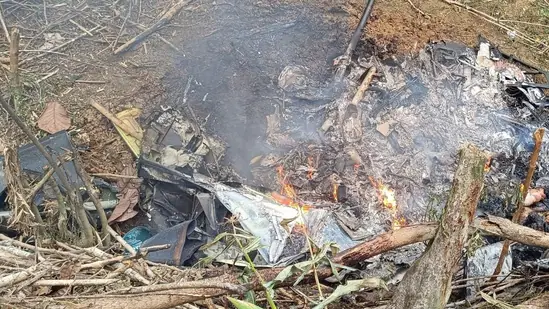
Pakistan Military Helicopter Crash in Muzaffarabad: All Personnel Killed
Details of the Tragedy and Immediate Response
Bharatmorningnews.com – A devastating incident unfolded in Muzaffarabad, Pakistan-occupied Kashmir, when a military helicopter crash claimed the lives of all personnel on board, according to the Pakistan Army’s official statement. The Mi-17 helicopter, a common model in the country’s military aviation fleet, crashed during takeoff, with authorities citing a probable technical malfunction as the cause. The tragic event has sent shockwaves through the region, raising concerns about the safety and reliability of military aircraft in the area. This is the second major accident involving a Pakistan military helicopter crash in less than a year, underscoring a growing need for thorough safety reviews and operational improvements.
Rescue and recovery operations were launched within minutes of the incident, with local emergency teams and military personnel working tirelessly to secure the site and retrieve the wreckage. The Pakistan Army’s Information and Public Relations Department (ISPR) confirmed in a statement reported by Dawn that
“All personnel on board embraced martyrdom. There were no survivors.”
The confirmation highlights the severity of the crash, as no one was able to escape the downed helicopter. ISPR also noted that the Chief of the Army Staff, Asim Munir, and senior military officials expressed deep sorrow over the tragedy and extended their condolences to the families of the victims. The incident has been described as a major setback for Pakistan’s military aviation capabilities, particularly in the challenging terrain of the Northern Areas.
Historical Context and Previous Incidents
The Mi-17 helicopter, a Soviet-era model, has been a staple of Pakistan’s military aviation since the 1980s. Its versatility and ability to operate in remote and rugged areas have made it a critical asset for military operations in regions like Kashmir and Balochistan. However, its age and frequent use have also contributed to a series of accidents that have raised questions about maintenance and operational protocols. This latest crash in Muzaffarabad follows a similar incident in September 2025, where a Mi-17 helicopter crashed in the northern region, resulting in the deaths of two pilots and three technicians, as reported by AP. Those incidents highlight a pattern of technical failures that have led to significant loss of life in recent years.
Experts have pointed to the helicopter’s reliance on older technology and the potential for mechanical issues due to prolonged service. The crash in Muzaffarabad, located in the Azad Jammu and Kashmir region, adds to the list of Pakistan military helicopter crash incidents that have occurred in this area. The location is strategically important, as it serves as a hub for military logistics and troop movements. The fact that the crash happened during takeoff suggests that the problem may have originated from the aircraft’s systems before it could reach cruising altitude. This raises concerns about the safety checks and pre-flight inspections conducted by the military aviation corps.
Investigation and Safety Measures
In the wake of the tragedy, Pakistan’s military has initiated an independent investigation to determine the exact cause of the Mi-17 helicopter crash. The inquiry will focus on the technical malfunction that led to the accident, as well as any potential human factors or operational errors. ISPR has stated that the investigation will involve experts from both internal and external agencies to ensure a comprehensive analysis. This step is crucial to identify whether the crash was an isolated incident or part of a larger issue affecting the fleet.
The findings of the investigation are expected to provide insights into the design and maintenance of the Mi-17 helicopter, which has been used extensively in Pakistan’s military operations. Officials have emphasized the need to improve safety protocols and replace aging aircraft with modern alternatives. The recent Pakistan military helicopter crash has also prompted discussions about the role of the military in regional security and the importance of investing in reliable aviation assets. With the Mi-17 model being over four decades old, its continued use has become a topic of debate among military analysts and policymakers.
Broader Implications for Military Operations
The crash in Muzaffarabad has significant implications for Pakistan’s military aviation and its operations in sensitive regions. The loss of all personnel on board is a stark reminder of the risks associated with flying in mountainous and high-altitude areas, where weather conditions and terrain can complicate emergency responses. This incident underscores the challenges of maintaining a robust and safe military presence in Pakistan-occupied Kashmir, a region frequently targeted by militants and subjected to harsh environmental conditions.
Analysts have drawn comparisons to past Pakistan military helicopter crash incidents, noting that the frequency of such accidents has increased in recent years. The latest event adds to the growing list of concerns about the reliability of the military’s aviation fleet and the need for modernization. While the Mi-17 helicopter has served as a workhorse for the Pakistan Air Force, its aging infrastructure and susceptibility to mechanical failures have led to calls for replacing it with more advanced models. The tragedy has also prompted a review of safety measures in place for military flights in the region, with officials vowing to enhance protocols to prevent future disasters.
Community Impact and Ongoing Support
The Muzaffarabad helicopter crash has left a profound impact on the local community, particularly the families of the victims and the broader population. The area is known for its strong military presence, and the loss of life has been met with both grief and solidarity. Local leaders have expressed their condolences, emphasizing the importance of supporting the families affected by the Pakistan military helicopter crash. The incident has also sparked discussions about the role of the military in the daily lives of civilians and the need for continued investment in safety and infrastructure.