
From Upkar to Dhurandhar: How Bollywood’s language of patriotism moved from defiance to pride | Independence Day Special
From Defiance to Pride: The Evolution of Bollywood’s Patriotic Voice
Bharatmorningnews.com – Hindi cinema’s relationship with patriotism has undergone a remarkable transformation since its inception during British colonial rule. What began as subtle acts of defiance against imperial censors has evolved into a confident expression of national pride and self-assurance. The journey traces a path from revolutionary songs that challenged foreign authority to modern declarations that celebrate India’s growing global stature.
The Seeds of Nationalism in Early Cinema
Before the 1940s, patriotic themes in Indian films primarily emerged through historical narratives featuring legendary figures like Akbar, Ashoka, and Shivaji. The 1943 release Kismet marked a pivotal moment by introducing nationalism within a contemporary World War II setting. This film delivered one of cinema’s most powerful patriotic statements through its iconic song lyrics.
Aaj Himalaya ki choti se humne phir lalkaara hai, door hato ae duniya walon, Hindustan hamara hai
The filmmakers cleverly concealed the song’s true meaning from British censors by presenting it as a wartime message directed at India’s enemies. Despite this careful positioning, the song resonated deeply with Indian audiences, becoming a rallying cry for national consciousness.
War Dramas and the Pride of a Young Nation
Early patriotic cinema predominantly featured war narratives and freedom movement retellings. Haqeeqat chronicled events from the 1962 conflict with China, while Shaheed honored Bhagat Singh and his fellow revolutionaries. These productions delivered bold, uncompromising messages through their dialogue and music.
The 1960s witnessed Manoj Kumar pioneering a fresh approach to patriotic storytelling. Rather than focusing on resistance, his films celebrated India’s achievements and aspirations. Upkar introduced the beloved line ‘Mere desh ki dharti sona ugle’, while Purab Aur Pachhim conveyed a message of universal harmony through the song ‘Hai preet jahan ki reet sada’. Sunil Dutt’s Hum Hindustani similarly expressed gratitude toward Prime Minister Nehru’s leadership and India’s developmental progress.
Commercial Evolution and Modern Confidence
Screenwriter Shantanu Srivastava observes that shifting audience expectations drove changes in patriotic expression. He explained to ANI that as India became more self-reliant and economically prosperous, citizens developed deeper emotional connections to their national identity. “Whenever you see the tricolour or the national anthem plays, you get goosebumps,” he noted, highlighting how patriotism became intertwined with personal identity.
The 1980s brought commercial masala cinema, which transformed patriotic films into larger-than-life spectacles. Karma combined elements from Seven Samurai with a narrative about combating a terrorist leader, featuring the memorable declaration ‘Dil diya hai, jaan bhi denge, ae watan tere liye’. This era emphasized sacrifice as a central theme in loving one’s country.
Manoj Kumar’s Kranti became the decade’s biggest commercial success, presenting an action-packed story set during British rule. Meanwhile, Amitabh Bachchan explored this new patriotic sensibility in Main Azaad Hoon, where the superstar character battled corruption and social injustice.
The Contemporary Era: Bold Declarations and Unity
Twenty-first century Hindi cinema centered patriotic narratives around armed forces personnel defending the nation. Dialogues grew increasingly assertive and aggressive in tone. Sunny Deol’s powerful line in Gadar: Ek Prem Katha—”Hamara Hindustan zindabad tha, zindabad hai, aur zindabad rahega”—epitomized this confident voice. Arbaaz Khan delivered equally forceful words in Maa Tujhe Salaam: “Doodh maangoge to kheer denge, Kashmir maangoge to cheer denge.”
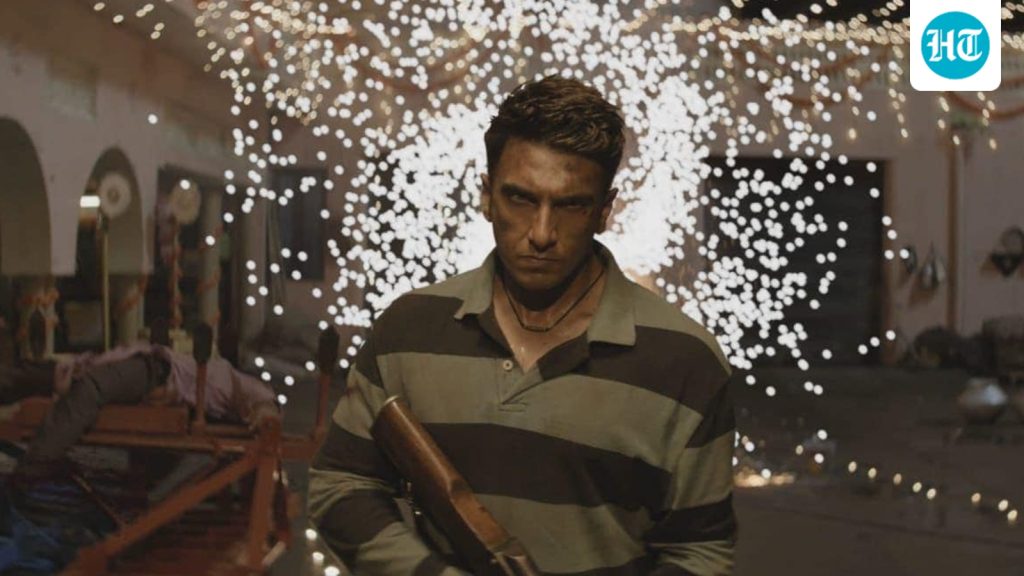
Ranveer Singh’s Dhurandhar represents the culmination of this evolution, with sentiments that align with contemporary national sentiment: “Yeh naya Hindustan hai; yeh ghar mein ghusega bhi aur maarega bhi.”
However, films emphasizing unity over confrontation have also left lasting impressions. Shah Rukh Khan’s Chak De! India delivered an unforgettable message about transcending regional divisions: “Mujhe states ke naam na sunayi dete hain na dikhayi dete hain, sirf ek aam sunai deta hai… INDIA.”
You could be from any religion, any State, or even an Indian living anywhere else in the world. Your roots, your heritage, that’s where you belong. When I first read the line ‘Vidya Sharma, India,’ I got goosebumps. It’s not just a line; it’s everything.
Vidya Malvade, who portrayed the team captain in Chak De! India, shared these reflections with ANI about the film’s unifying message.
Each August 15, these enduring dialogues and songs return to television screens through reruns and special programming. Viewers discover that these cinematic expressions mirror their own generational experiences, revealing how different eras of Indian history have shaped the nation’s voice.
Abhimanyu Mathur serves as Deputy Editor, Entertainment at Hindustan Times. With nearly fifteen years of experience covering films, television, sports, and elections, he brings deep expertise in pop culture journalism.
Related Reading
Frequently Asked Questions
What is From Upkar to Dhurandhar?
From Upkar to Dhurandhar is the main topic of this guide. The article explains the context, practical details, and next steps readers should understand.
Why does From Upkar to Dhurandhar matter?
From Upkar to Dhurandhar matters because readers are looking for a useful answer, not just a short summary. Good content should match search intent and help them decide what to do next.