
Shoulder-fired missile threat to Air Force One forced Trump’s secret flight switch in Turkey: Report
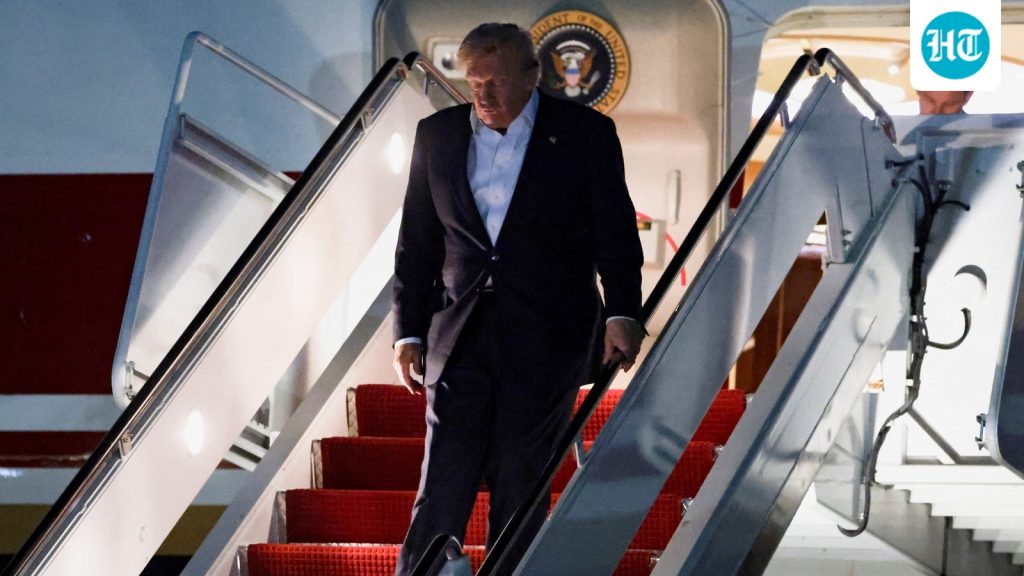
Trump’s Secret Flight Switch in Turkey Due to Missile Threat
Bharatmorningnews.com – A shoulder fired missile threat to Air Force One reportedly forced United States President Donald Trump to execute a dramatic and secret aircraft change during his visit to Turkey. According to a new report, the decision to swap the iconic presidential jet for an alternative aircraft following last month’s NATO gathering was driven by a targeted and precise danger that officials feared could compromise the President’s safety.
CNN, referencing an insider with knowledge of the situation, stated that American authorities quickly formulated a covert strategy to transport Trump out of the nation using a different jet. The warning was considered so specific that officials worried Trump’s security would be severely compromised if he departed Turkey aboard a recognizable aircraft—either the standard Air Force One or the Qatar-donated jet he utilized for the summit journey.
Covert Evacuation Plan Executed
The CNN source indicated the danger appeared particularly grave because Iranian officials were aware of Trump’s Turkish plans, though they declined to elaborate on the threat’s source. This intelligence prompted immediate action within the presidential security apparatus, ensuring that every detail of the evacuation was carefully coordinated.
Trump, who stayed a single evening in Ankara for the summit, traveled with numerous high-ranking officials. These included Secretary of State Marco Rubio, Treasury Secretary Scott Bessent, Defense Secretary Pete Hegseth, and Joint Chiefs of Staff Chairman Gen. Dan Caine. Military and secret service personnel coordinated a scheme to move Trump to a smaller aircraft while concealing him inside a catering truck.
Video analysis by CNN revealed that Ankara Airport staff began placing the catering truck alongside Air Force One prior to Trump’s motorcade reaching the tarmac for departure. This visual evidence helped confirm the timeline of events and the meticulous planning involved in the covert operation.
Once the President boarded the main aircraft, the catering truck’s container was lowered, and it departed from the larger plane heading toward the smaller C-32A. Air Force One then took off without its commander at approximately 8:44 p.m. local time. The smaller aircraft followed suit, taxiing away one minute later.
Aftermath and Presidential Response
US authorities noted that Rubio and Bessent stayed aboard the larger plane alongside other White House employees, military members, and journalists. Meanwhile, Trump’s closest personal assistants accompanied him on the small aircraft that transported him to a British military installation. This division of personnel ensured that critical government functions continued uninterrupted during the transition.
Later, Trump acknowledged the aircraft change and explained his willingness to follow military and Secret Service guidance. His comments reflected confidence in the security protocols that had been activated during the incident.
“I go by Secret Service and the military. They wanted me to go on a different flight, a different plane… I do what they say… I guess there was a threat out there. I didn’t really ask too much about it. I get a lot of threats.”
He further remarked, “Non-consequential Presidents don’t get threatened, and I think I’m maybe the most consequential President.” This statement underscored his perspective on the significance of the incident and his role on the global stage.
Understanding the Threat
The shoulder fired missile threat to Air Force One highlights the evolving nature of security challenges facing world leaders. Shoulder-fired missiles, also known as MANPADS (Man-Portable Air-Defense Systems), are lightweight weapons that can be operated by a single soldier. These missiles have become increasingly sophisticated and pose a genuine risk to aircraft during takeoff and landing phases.
The timing of the threat in Turkey was particularly significant given the geopolitical tensions in the region. Iran’s awareness of Trump’s plans suggested that the threat may have been coordinated with regional adversaries. Security experts noted that the covert nature of the aircraft switch was essential to prevent the threat from being exploited.
Historical Precedents
This incident recalls similar security measures taken in the past. The secret flight switch revives memories of Bill Clinton’s 2000 India-Pakistan decoy flight, which also involved an al-Qaeda link. Such historical parallels demonstrate that presidential security protocols have evolved to address both traditional and emerging threats.
The use of a catering truck as a concealment method was particularly innovative. Airport staff were able to integrate the truck into normal operations without raising suspicion. This approach minimized the risk of the operation being compromised by onlookers or media personnel.
FAQ: Shoulder Fired Missile Threat to Air Force One
What is a shoulder-fired missile?
A shoulder-fired missile, or MANPADS, is a lightweight, portable anti-aircraft weapon that can be operated by a single soldier. These missiles are designed to target low-flying aircraft and are particularly dangerous during takeoff and landing.
Why was the aircraft switch considered secret?
The aircraft switch was kept secret to prevent the threat from being exploited. By using a catering truck to conceal Trump and switching to a smaller C-32A aircraft, officials minimized the risk of the operation being compromised.
How did the catering truck help in the evacuation?
The catering truck was placed alongside Air Force One and served as a mobile concealment unit. Once Trump boarded the main aircraft, the truck’s container was lowered and it departed toward the smaller C-32A, effectively hiding the President during the transition.
What role did Iran play in the threat?
Iranian officials were aware of Trump’s Turkish plans, suggesting that the threat may have been coordinated with regional adversaries. However, they declined to elaborate on the specific source of the danger.
Has this happened before?
Yes, this incident recalls similar security measures taken in the past, including Bill Clinton’s 2000 India-Pakistan decoy flight, which also involved an al-Qaeda link. Such historical parallels demonstrate that presidential security protocols have evolved to address both traditional and emerging threats.