
Scientifically Speaking: The killer hiding in plain sight
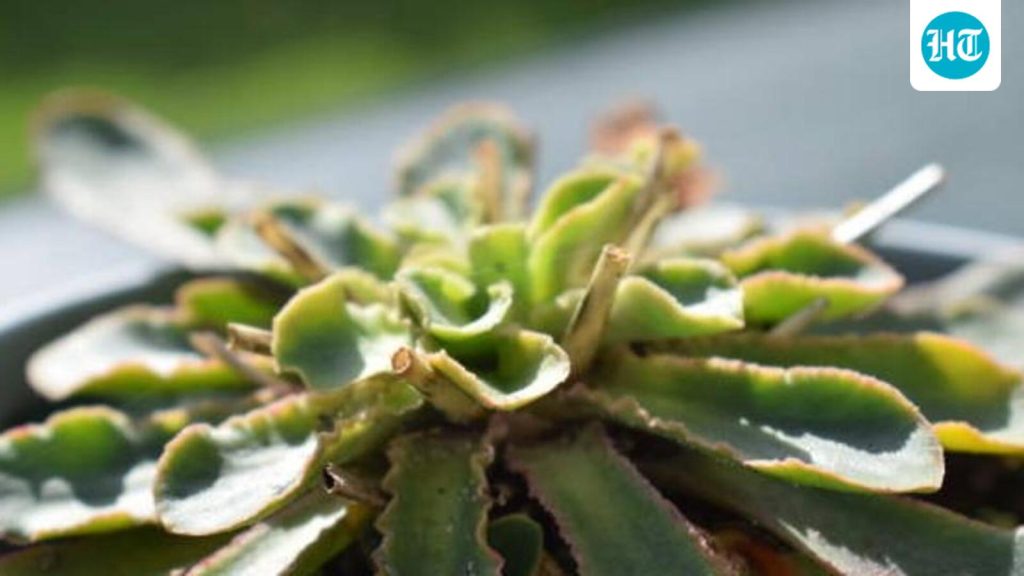
A Hidden Predator Revealed: The Carnivorous Saxifraga
Bharatmorningnews.com – For over a century, botanists have been puzzled by an odd phenomenon captured in herbarium collections. When examining forty-five preserved flowering specimens of Saxifraga candelabrum stored at the Kunming Institute of Botany, researchers discovered something remarkable. Spanning collection dates from 1888 through 2016, forty-three of these specimens still bore insects firmly attached to their surfaces. These tiny captives represented visual proof of an unexplained botanical behavior that had eluded complete understanding.
Now, a recent publication in Nature Communications has finally solved this botanical mystery. The plant thrives within rocky crevices across the mountainous regions of Yunnan and Sichuan in southwestern China. Despite growing in soil deficient in essential nutrients, this species has evolved a carnivorous lifestyle. Minute reddish hairs, coated in a sticky substance, ensnare passing insects. Within these hairs, digestive enzymes break down captured prey, allowing vital nutrients to flow into the plant’s system.
Darwin’s Unfinished Investigation
Charles Darwin devoted considerable time to studying plants that consume animals. His 1875 work, Insectivorous Plants, detailed experiments involving sundews and other species capable of capturing and digesting animal matter. Darwin became particularly fascinated by two European saxifrage varieties whose adhesive hairs mirrored those found in established carnivorous plants. He conducted his own feeding experiments on these specimens, though his results proved inconclusive. Neither of Darwin’s European specimens matches the Chinese relative examined in this new research, leaving the question of whether his observations held merit still open to debate.
Researchers approached the problem by first analyzing observable field characteristics. Adult plants typically harbored an average of seventy-one trapped insects, predominantly minute non-biting midges. Plants possessing longer and more numerous flowering branches demonstrated greater insect capture rates. Examination of historical herbarium specimens revealed that this trapping behavior extended beyond recent times or localized areas. Insects remained attached to specimens gathered across more than one hundred years, confirming that capture represents a standard aspect of this plant’s existence.
Scent and Survival
Field experiments demonstrated that the plant actively attracts its prey. Scientists manipulated flower exposure by either blocking scent while permitting visual access, or vice versa. Results showed significantly higher insect visitation when scent cues remained available compared to when odor was obstructed. Analysis identified multiple floral scent compounds, suggesting that what appears to be a routine flower may actually function as a predatory trap for approaching midges.
This dual function creates an ecological challenge. Like all flowering plants, the insect-eater requires pollinators for reproduction. However, the insects ensnared on sticky hairs were predominantly small midges, whereas larger flies and bees visited flowers and typically escaped capture. Scientists propose this size differentiation solves the potential conflict. Smaller, less effective pollinators become trapped while larger pollinators possess sufficient strength to free themselves.
Confirming Carnivory
Proving the plant actively consumed insects demanded additional verification. Testing sticky hairs for phosphatase—an enzyme commonly employed by carnivorous plants to extract nutrients from prey—revealed clear enzymatic activity. A closely related non-carnivorous species tested under identical conditions showed no such activity.
Further confirmation came through nitrogen tracking. Researchers positioned fruit flies containing traceable nitrogen isotopes onto the adhesive hairs, then monitored nutrient movement. After fourteen days, labeled nitrogen had successfully entered plant tissues. This same transfer occurred in sundews, well-known carnivorous plants, but failed to appear in two non-carnivorous control species.
Nitrogen distribution patterns revealed strategic nutrient allocation. Flowers contained the highest enrichment levels, followed by upper stem leaves, with base leaves showing minimal accumulation. Since the plant flowers only once before dying, insect-derived nutrients appear channeled toward this singular reproductive event. In the nutrient-deficient alpine environments where Saxifraga candelabrum resides, captured insects provide a valuable supplementary nitrogen source.
Carnivorous adaptations have emerged independently across numerous flowering plant lineages, producing sundew adhesive leaves, pitcher plant fluid-filled chambers, and Venus flytrap snap mechanisms—all solving the same fundamental problem: acquiring nutrients in resource-poor conditions.
While we typically recognize carnivorous plants through dramatic adaptations like snapping traps or drowning chambers, this species employs a subtler approach. Fine sticky hairs capture small insects, and the plant extracts nourishment directly from their bodies.
The Indian Himalayan region alone has documented sixty-four species within this plant category. India’s extensive historical botanical collections offer promising opportunities for future discoveries regarding these remarkable carnivorous organisms.
Related Reading
Frequently Asked Questions
What is Scientifically Speaking?
Scientifically Speaking is the main topic of this guide. The article explains the context, practical details, and next steps readers should understand.
Why does Scientifically Speaking matter?
Scientifically Speaking matters because readers are looking for a useful answer, not just a short summary. Good content should match search intent and help them decide what to do next.