
Huge row after Congress candidate Meenakshi Natarajan’s RS nomination rejected in Madhya Pradesh
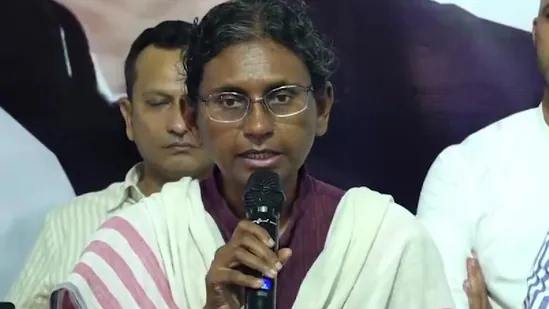
Congress Candidate Meenakshi Natarajan’s Rajya Sabha Nomination Rejected, Sparks Huge Row
Bharatmorningnews.com – Huge row after Congress candidate Meenakshi Natarajan’s Rajya Sabha nomination was rejected in Madhya Pradesh. The incident has ignited widespread debate, with political leaders and observers questioning the transparency and fairness of the decision. Natarajan, a prominent Congress leader, submitted her nomination documents for a seat in the Rajya Sabha, but the Returning Officer reportedly dismissed it due to alleged omissions in her election affidavit.
According to an MP Assembly official, the rejection was based on claims that Natarajan had not included critical information about a criminal case in her filing. The official stated, “The Returning Officer cited the absence of specific case details as the reason for rejecting her nomination.” This move has raised eyebrows, as it appears to target a Congress candidate during a crucial phase of the election cycle. The legal case in question, which is currently under consideration in a Telangana court, was not mentioned in her documents, prompting accusations of deliberate concealment.
Political Allegations and Democratic Concerns
“This rejection isn’t just about one candidate—it’s a systematic effort to undermine democratic processes,” said Natarajan, who is now facing a political storm. “The BJP has been accused of using this as a tool to control the narrative and secure their interests.” She added that the omission of the case details was “intentional,” and that the decision to reject her nomination was part of a larger strategy to weaken the Congress’s position in the state.
The Congress has accused the ruling party of orchestrating a “deliberate attack” on electoral fairness. Leaders argue that the timing of the rejection, just days before the Rajya Sabha elections, was calculated to disrupt the party’s campaign momentum. “They are trying to create chaos,” said Yadvendra Singh, a Congress MLA, who highlighted the lack of procedural clarity in the decision-making process.
Reactions from Congress and Election Commission
Congress general secretary KC Venugopal called the rejection “a blatant act of political manipulation.” He criticized the Election Commission (ECI) for not providing sufficient reasoning for the decision, stating, “The ECI must ensure transparency in their rulings, especially when it affects a major party’s candidate.” Venugopal emphasized that the issue was not just about one nomination, but a “threat to the democratic fabric of the nation.”
Sachin Pilot, another Congress representative, echoed similar sentiments. He argued that the rejection was “unprecedented” and that the ECI had failed to uphold its role as an impartial arbiter. “We have never seen a candidate’s nomination rejected without a clear legal basis,” Pilot noted. The party’s leaders are now demanding a thorough review of the case, with some suggesting that the ECI’s decision could set a dangerous precedent for future elections.
Bhupesh Baghel, a Congress leader, criticized the procedural rigor applied to Natarajan’s case. He pointed out that the party was given a tight deadline to file an appeal, only to face closure of the office at 5:30 PM. “This shows a lack of support for our candidates,” he said, adding that the rejection was “a calculated move to suppress opposition voices.”
Legal Case as a Political Lever
The rejection was triggered by a complaint from BJP candidate Mahesh Kevat, who contested the third Rajya Sabha seat in Madhya Pradesh. His legal team argued that Natarajan’s omission of the case details was a violation of electoral rules. “The case against Natarajan is ongoing, and her affidavit should have reflected that,” said Sanket Gupta, the lawyer representing Kevat.
Natarajan’s legal team, however, claims the case is not yet finalized. “There is no FIR or chargesheet against her, yet they used this as a pretext to reject her nomination,” stated one of her advocates. This discrepancy has fueled speculation that the decision was politically motivated, with critics alleging that the BJP is using legal procedures to secure a strategic advantage in the state assembly elections.
Public and Media Response
The incident has drawn sharp reactions from both the public and media outlets. Several news channels have highlighted the controversy, framing it as a “test case” for the ECI’s impartiality. Social media users have taken to platforms to express their support for Natarajan, with some accusing the BJP of “engineered suppression” of opposition candidates.
Meanwhile, legal experts are questioning the validity of the rejection. “The ECI needs to clarify why the case details were deemed essential for a Rajya Sabha nomination,” said one analyst. “This could set a precedent for stricter scrutiny of candidates, potentially influencing the outcome of future elections.” The debate is expected to continue as the Congress prepares to challenge the decision in court, seeking justice for what they call a “political overreach.”
The rejection of Natarajan’s nomination has not only intensified the political feud between the Congress and BJP but also sparked a broader conversation about the role of legal procedures in shaping electoral outcomes. As the state prepares for its next phase of elections, the incident may serve as a cautionary tale for candidates and parties alike, underscoring the need for meticulous compliance with electoral rules while safeguarding democratic integrity.