
Electric fans used to dry repair site on newly inaugurated UP expressway: ‘Are we rolling back to stone age!’
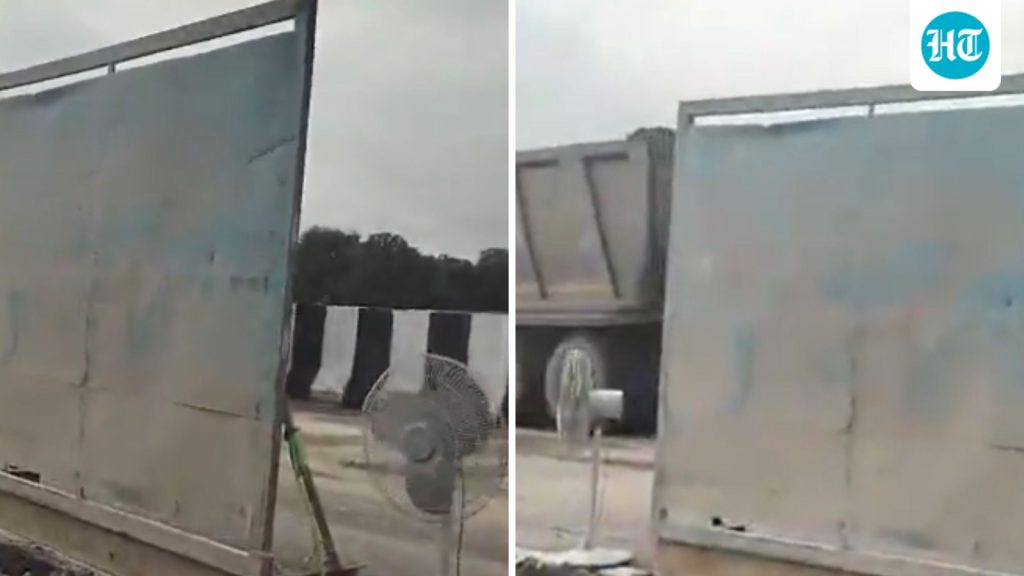
UP Expressway Repair Uses Electric Fans: Stone Age or Smart Solution?
Bharatmorningnews.com – Electric fans used to dry repair work on Uttar Pradesh’s newly inaugurated Kanpur-Lucknow Expressway has become a viral sensation. Pedestal fans placed along the roadside to accelerate drying of waterlogged pavement have sparked intense debate among netizens and experts alike. The unusual sight of household appliances working on highway maintenance has raised questions about modern infrastructure practices.
Video clips showing multiple electric fans positioned strategically to blow air onto wet road surfaces have spread rapidly across social media platforms. Repair crews deployed this method to prepare the damaged section before applying fresh asphalt and completing essential patch work. The visual contrast between traditional construction equipment and simple electric fans created an immediate talking point.
Public Reaction and Expert Analysis
Social media users expressed mixed reactions to the unconventional approach. One frustrated commenter wrote, “Are we rolling back to the Stone Age!!! Marvellous technologies invented by so-called stakeholders.” The sentiment captured widespread skepticism about whether electric fans could effectively handle road repair drying needs.
Another user turned to artificial intelligence for clarification, asking whether the fans were genuinely useful or if natural wind would suffice. The AI response provided valuable technical insight into the drying process and airflow dynamics involved in road maintenance.
Pedestal fans help dry road patches by forcing air over the wet surface, which speeds evaporation of residual rainwater versus still air. Natural wind can match or exceed that if it is strong and steady. The fans mainly provide consistent, targeted airflow to specific spots when ambient breeze is light or uneven, aiding quicker readiness for fresh asphalt bonding.
Additional comments reflected similar bewilderment. One person simply asked, “Can a domestic fan dry a road?” while another quipped, “Is that space technology?” The humorous responses highlighted public curiosity about the engineering logic behind the decision.
Official Action and Infrastructure Impact
The National Highway Authority of India took swift action after identifying problems on the expressway. Strict measures were initiated against the concessionaire, the Independent Engineer, and relevant officials responsible for the repair work. The authority confirmed that corrective steps have been implemented to restore the affected area and prevent future issues.
The damage caused significant disruption to traffic flow on one of India’s most important highway corridors. Authorities diverted vehicles around the problematic section until repairs could be completed using the electric fan method. This approach allowed work to continue without major delays despite the unconventional technique.
Understanding the Drying Process
Electric fans used to dry repair surfaces work on basic principles of evaporation and air movement. When water sits on asphalt or concrete, it requires time to evaporate naturally. Fans accelerate this process by continuously moving air across the wet surface, removing moisture more efficiently than still air conditions.
The method proves particularly useful during monsoon seasons or after heavy rainfall when natural drying would take considerably longer. While it may appear primitive compared to industrial drying equipment, the approach offers practical advantages in terms of cost, portability, and ease of deployment.
Frequently Asked Questions
Q: How long do electric fans typically need to dry a road patch? A: The duration depends on weather conditions, fan capacity, and the extent of waterlogging. Generally, fans can reduce drying time by 40-60 percent compared to natural evaporation in calm conditions.
Q: Are electric fans suitable for all types of road repairs? A: They work best for surface-level repairs and asphalt patching. For deeper structural issues or large-scale resurfacing, additional equipment may be necessary alongside fan assistance.
Q: Why was this method chosen for the UP Expressway? A: The expressway experienced waterlogging shortly after inauguration. Electric fans provided a quick, cost-effective solution to prepare the surface before applying new asphalt layers without delaying traffic for extended periods.
Q: Can this method be used year-round? A: Yes, though effectiveness varies with humidity levels and temperature. The approach is particularly valuable during rainy seasons when moisture retention poses challenges for timely repairs.
Looking Ahead
The controversy surrounding electric fans used to dry repair work on the UP Expressway highlights broader questions about infrastructure management and public communication. While the method may seem unconventional, it demonstrates practical problem-solving in challenging conditions. As authorities implement corrective measures, the incident serves as a reminder that innovation sometimes comes in familiar forms.