
Between placards and Parliament: What a ‘pressure group’ is, and where Abhijeet Dipke’s CJP fits
Understanding Pressure Groups: The CJP’s Role in Indian Politics
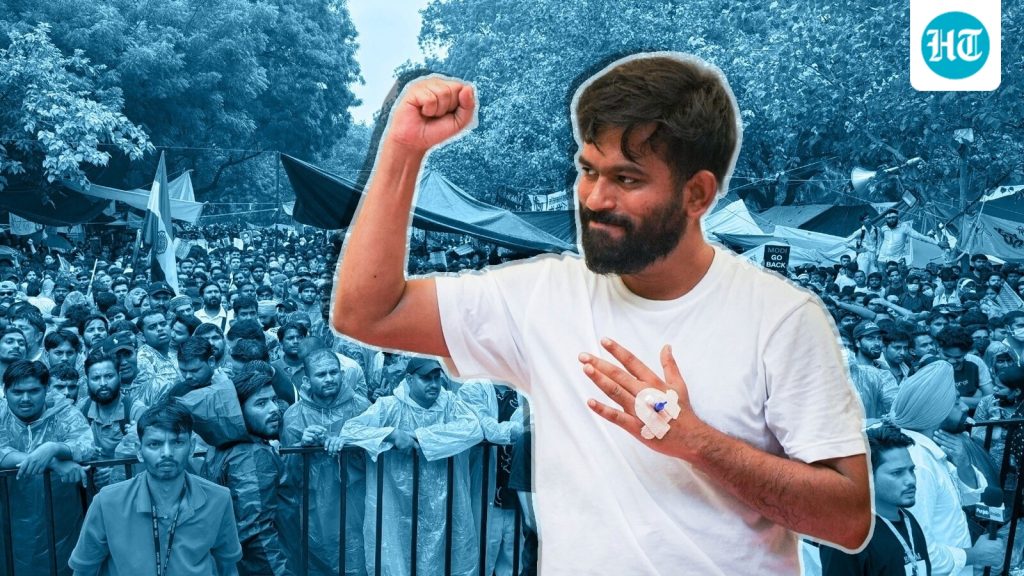
Bharatmorningnews.com – Abhijeet Dipke, the founder of the Cockroach Janta Party, announced on Wednesday from his hometown of Chhatrapati Sambhajinagar that his organization would operate as a pressure group. This approach aims to demand institutional accountability while its members journey to Ranchi to support candidates protesting claimed irregularities in the Jharkhand Public Service Commission’s recruitment examinations.
When questioned about whether the CJP planned to participate in electoral contests, Dipke noted that journalists seemed more enthusiastic about the possibility than the party itself.
For now, CJP will be a pressure group, as what India needs now is a pressure group.
Academic Foundations of Pressure Groups
According to political science frameworks, pressure groups seek to shape public policy without directly contesting elections or holding office. This contrasts with political parties, which aim to govern. Such distinctions influence organizational structures, fundraising methods, and strategic priorities. The NCERT Class 10 Democratic Politics-II textbook, featuring a chapter called ‘Popular Struggles and Movements’, outlined these concepts and remained part of the curriculum through 2023.
However, practical politics often blurs these boundaries. Opposition parties sometimes function like pressure groups on specific issues, while pressure groups occasionally evolve into political parties or establish affiliated organizations.
Categories and Classifications
Academic frameworks offer multiple ways to categorize pressure groups. One approach distinguishes between sectional and promotional organizations. Sectional groups represent particular constituencies—trade unions for laborers, industry chambers for businesses. Promotional groups advance causes without fixed membership, addressing issues like environmental protection, corruption, or examination reform. Under this system, the CJP qualifies as a promotional group.
Another classification stems from Gabriel Almond and James Coleman’s 1960 work, The Politics of the Developing Areas, later expanded by Almond and G. Bingham Powell in Comparative Politics: A Developmental Approach (1966). This framework identifies four organizational types: anomic groups characterized by spontaneous, unstructured protests; non-associational groups based on kinship, caste, or ethnicity; institutional groups formed for other purposes that also lobby; and associational groups with formal membership structures.
The Jantar Mantar sit-in during June and July represented an anomic approach, while the Sambhajinagar gathering to establish a core team signaled movement toward associational organization.
Insiders and Outsiders
British political scientist Wyn Grant proposed another distinction in his 1978 Warwick working paper, ‘Insider Groups, Outsider Groups and Interest Group Strategies in Britain’. This model separates groups into insiders—those regularly consulted by government—and outsiders who campaign through streets, media, and courts.
Under this analysis, organizations like Ficci and CII function as insiders by design. Historical movements such as the 1970s Chipko movement and the Narmada Bachao Andolan operated as outsiders. Groups can transition between categories: the Mazdoor Kisan Shakti Sangathan, founded in 1990 in rural Rajasthan to advocate for wage records, later played a pivotal role in promoting the 2005 Right to Information Act.
Methods of Influence
Pressure groups employ various strategies. Quiet lobbying and pre-legislative consultation serve as primary channels for insiders. Litigation gained prominence in India through public interest litigation, which the Supreme Court expanded from the late 1970s. Media engagement and agenda-setting represent another method. Mass mobilization includes visible forms like sit-ins, marches, and hunger strikes. Electoral pressure operates without direct contestation through endorsements, voter education, or the credible threat of splinter parties.
The CJP’s July mobilization utilized mass mobilization. Environmentalist and education activist Sonam Wangchuk joined the protest at Jantar Mantar, with his hunger strike adding momentum to the demonstration.
CJP chief spokesperson Saurav Das reported to PTI on Wednesday that Wangchuk would continue serving as the organization’s mentor, with the group seeking his guidance.
While popular imagery associates pressure groups with placards, sit-ins, and hunger strikes—characteristics fitting the CJP—industry federations like Ficci, CII, and Assocham also qualify under academic definitions. These organizations differ from agitational groups primarily in method rather than category, preferring quiet lobbying through pre-Budget consultations and committee submissions over street demonstrations. Trade unions, farmer organizations, professional associations, and most non-governmental campaigns operate similarly.
Related Reading
Frequently Asked Questions
What is Between placards and Parliament?
Between placards and Parliament is the main topic of this guide. The article explains the context, practical details, and next steps readers should understand.
Why does Between placards and Parliament matter?
Between placards and Parliament matters because readers are looking for a useful answer, not just a short summary. Good content should match search intent and help them decide what to do next.