
Trump caught between Apple and Micron in fight over Chinese chips
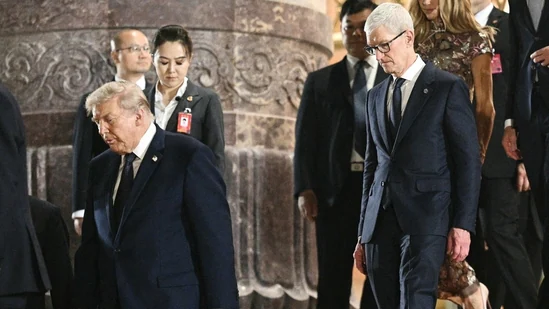
Apple and Micron Clash as Trump Weighs Chinese Chip Policy
Bharatmorningnews.com – President Trump now finds himself at the center of a corporate showdown between Apple and Micron Technology over whether American tech firms should source memory chips from Chinese manufacturers. Apple has been conducting an intensive lobbying effort to lower expenses by incorporating Chinese memory chips into its products, while Micron is mounting an equally vigorous campaign to prevent this shift.
The Proposal and Its Implications
According to sources close to the discussions, Tim Cook and other Apple executives have recently presented Trump alongside Commerce Secretary Howard Lutnick and Treasury Secretary Scott Bessent with a strategy. The proposal would permit Apple to utilize memory chips manufactured by China’s ChangXin Memory Technologies and Yangtze Memory Technologies for devices sold internationally.
Apple contends this approach would ease the worldwide memory chip shortage and potentially lower costs for American shoppers. However, Micron—the sole substantial American producer of memory chips—has pushed back strongly against the idea.
Micron’s Warning to Administration Officials
Micron CEO Sanjay Mehrotra and other company leaders have cautioned Lutnick and other government officials that permitting CXMT and similar Chinese firms to supply U.S. technology companies could undermine the domestic industry. They drew parallels to how Chinese competition helped devastate American steel and manufacturing operations in previous decades.
Apple and other purchasers of memory chips had largely steered clear of Chinese suppliers after the Pentagon classified them as Chinese military entities in recent years. Additionally, YMTC appears on the U.S. trade blacklist known as the entity list.
Trump’s Dilemma
This lobbying battle is expected to compel Trump to select between two key economic objectives: reducing prices for American consumers and expanding domestic semiconductor manufacturing to lessen reliance on foreign nations. The president has generally avoided imposing strict restrictions on Chinese companies during ongoing trade talks and has commended both Apple and Micron for their investments within the United States.
“Investments and economic relief for the American people while safeguarding our national security” will guide the administration’s approach, White House spokesman Kush Desai stated.
Historical Tensions and New Realities
The negotiations between Apple and Micron have grown increasingly contentious, with personal animosity developing over time. Prior to becoming Micron’s CEO, Mehrotra led Sandisk, another memory chip supplier to Apple. During his tenure at Sandisk, his frustration with Apple was so pronounced that he seldom met with the company. That hostility persists today.
However, the artificial intelligence boom has shifted this balance in Mehrotra’s favor. Major data center operators now purchase enormous quantities of memory at premium prices, diminishing Apple’s negotiating power. This supply deficit has allowed memory manufacturers to raise prices, which have quadrupled over the last twelve months and are projected to climb even higher, according to research firm TechInsights. Producer stock prices have also surged dramatically.
Apple’s Counterarguments
Apple is raising concerns, asserting that Micron’s gross profit margins—now exceeding 80%—demonstrate excessive pricing. The iPhone manufacturer also maintains that Micron is not reinvesting quickly enough to expand supply, and that new production capacity will be disproportionately directed toward AI customers. Various sectors, ranging from automotive to medical devices, have requested government assistance in tackling the shortage.
“The most important thing is we have to build capacity here. We obviously don’t want to be doing business with anyone that’s on the entity list,” Michael Kratsios, director of the White House Office of Science and Technology Policy, told lawmakers this week.
Micron’s Response and Future Plans
Micron executives contend the company can help resolve the memory squeeze by accelerating domestic plant construction and increasing home investments. The firm has noted that price increases on consumer electronics, including Apple devices, stem from factors beyond just higher memory costs.
Trump has publicly expressed his desire to substantially boost American chip production before his term concludes. Meanwhile, Micron has announced plans to invest $250 billion in expanding its operations.
The conflict also intensifies broader debates within the administration regarding Chinese technology. Chinese companies have recently unveiled powerful artificial intelligence models, leading some American executives to advocate for protections against lower-cost Chinese competitors. Their opposition includes startup founders and investors who maintain that reduced costs drive innovation.
As one of the world’s largest memory chip purchasers, Apple has consistently pressured Micron and competing suppliers for the most competitive component prices for years. These memory manufacturers depend on Apple’s substantial order volumes to maintain their manufacturing facilities at full capacity.